Short answer
This is the question that gets homeowners in the most trouble in Northeast Florida, because the intuitive answer — "it is my property, it is my tree" — is not how it works here.
Tree removal is regulated at the local level, which means the rules for a house inside St. Augustine city limits are different from one two miles west in unincorporated St. Johns County, and both are different from Palm Coast. On top of that, deed-restricted communities add their own approval process. Here is how to sort out which applies to you.
Step one: figure out your actual jurisdiction
A St. Augustine mailing address does not mean you are inside the City of St. Augustine. Large parts of 32084, 32086, and 32092 are unincorporated county, governed by the St. Johns County Land Development Code rather than the city ordinance.
You can confirm this through the county property appraiser record for your parcel, which shows the taxing jurisdiction. If you are inside city limits, the city’s tree protection rules apply. If you are in the county, the county code applies. If you are in Palm Coast, Green Cove Springs, or another municipality, that city’s ordinance governs.
This is not a technicality. The thresholds, the protected species lists, and the mitigation requirements genuinely differ, and applying the wrong set is how people end up in code enforcement.
What generally triggers a permit requirement
Across Northeast Florida jurisdictions, the same handful of factors determine whether you need approval.
The dead and dangerous tree question
Most ordinances treat dead, dying, and imminently hazardous trees differently from healthy ones — often with reduced or waived mitigation, and sometimes with an expedited process. Florida law also provides relief for documented dangerous trees on residential property when the condition is supported by proper documentation from a qualified professional.
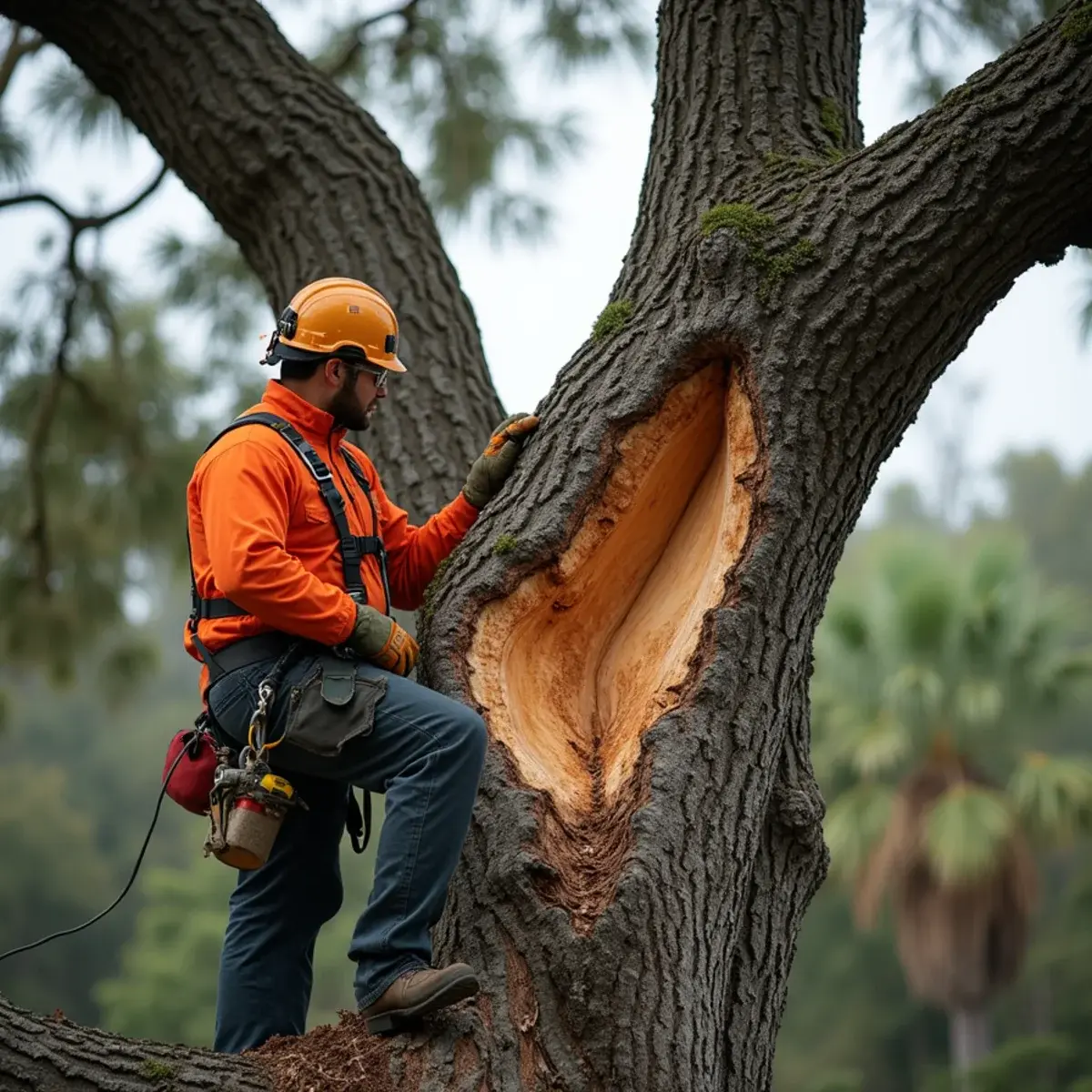
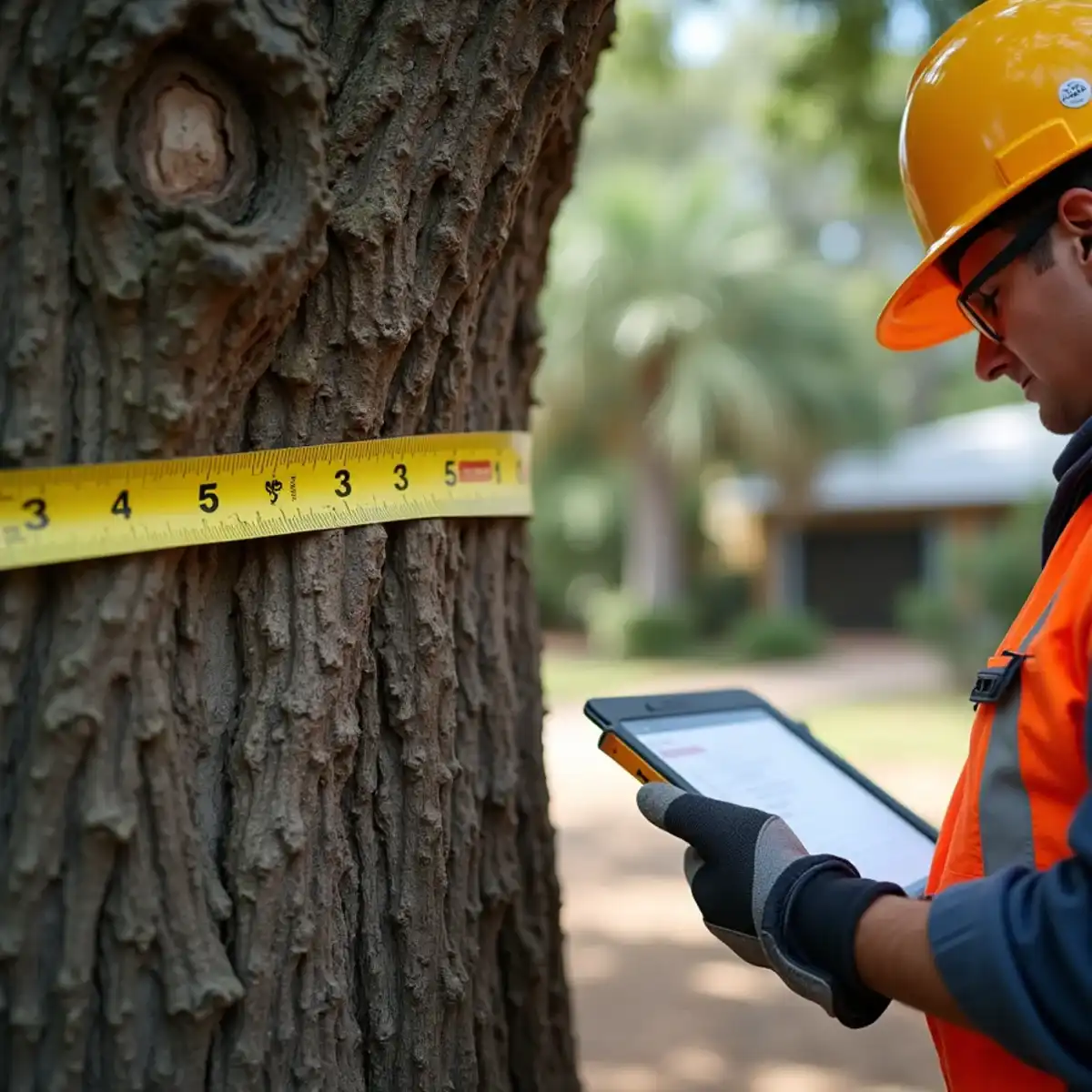
The catch is in the word "documented." A photograph you took after the tree was already on the ground is not documentation. What jurisdictions want is an assessment from an arborist that identifies the defect — the decay, the conk, the crack, the lean, the root damage — before the tree comes down.
This is exactly why we photograph and document every hazard tree we are called to. Our tree health and risk assessment service produces the written report that turns a questionable application into an approved one.
Mitigation: what replacement planting actually means
When a healthy protected tree is approved for removal, jurisdictions typically require mitigation — replacing the removed trunk inches with new nursery stock, or contributing to a tree fund where that option exists.
Two things reduce mitigation cost significantly. First, documented hazardous condition, which is why the assessment matters so much. Second, choosing replacement species and locations intelligently. Ordinances usually accept a range of species and sizes, so planting trees that will actually thrive on your site — rather than three that die in year two and have to be replaced — is entirely within your control. Our guide to the best trees to plant in Northeast Florida covers species that hold up here.
HOAs and CDDs are a separate layer
This trips people up constantly in Nocatee, World Golf Village, Julington Creek Plantation, and similar communities. Your architectural review board is not the county. You can hold a valid county permit and still be in violation of your covenants, and the association can require you to replant at your own expense.
The reverse is also true: ARB approval does not substitute for a county permit. Both have to be in place before anything comes down. We check both layers as part of every quote in a deed-restricted community, and it takes about ten minutes.
What happens if you skip it
Code enforcement action, fines, and a mitigation requirement that is often calculated on the removed diameter — meaning a single mature oak can turn into a requirement to plant a substantial number of replacement trees.
If it has already happened — a previous owner, a contractor who did not check, or a genuine misunderstanding — do not ignore the notice. These situations are usually resolvable through after-the-fact permitting and mitigation, and they go considerably better when someone documents the situation properly.
Frequently asked questions
The bottom line
The short version: assume you need to check, and check before anyone starts a saw. It takes minutes, and the alternative is a code enforcement case.
We handle permit applications as part of the job across St. Augustine, St. Johns County, and Palm Coast — including the arborist documentation that supports a hazardous tree removal. If you are looking at a tree and wondering, call and we will tell you where you stand.
Want a real answer about your specific tree?
Call +1 (208) 635-2100 for a free on-site estimate across St. Augustine and St. Johns County. We will tell you plainly what it needs — including when the answer is nothing.
- 47 five-star reviews
- Licensed & insured
- 24/7 storm response