Short answer
When you probably need a permit
What’s included with tree removal permit assistance
Free estimate for permit help in St. Augustine
Permit Help on the job in St. Augustine
How the rules differ by address
Northeast Florida jurisdictions each write their own tree ordinance, and the boundaries are not intuitive. A neighborhood with a St. Augustine mailing address may sit in unincorporated St. Johns County, under entirely different rules.
City of St. Augustine
The city protects its canopy actively — it is a core part of the historic character downtown and in Lincolnville, Abbott Tract, and the surrounding neighborhoods. Removal of regulated trees generally requires a permit, and approvals commonly come with replacement planting conditions. Dead, dying, and hazardous trees are treated differently from healthy ones, which is where a documented arborist assessment does the heavy lifting.
Unincorporated St. Johns County
The county land development code regulates protected trees, with size thresholds and mitigation requirements that vary by zoning and land use. Single-family homesteads are treated differently from commercial parcels and new development.
Deed-restricted and CDD communities
Nocatee, World Golf Village, Julington Creek Plantation and similar communities layer covenants and architectural review on top of the government rules. You can hold a valid county permit and still be in violation of your covenants. We check both.
Flagler, Clay, and Putnam counties
Palm Coast in particular is strict, with its own tree ordinance and removal permitting process distinct from Flagler County. Clay and Putnam have their own thresholds. We confirm what applies before quoting the work.
What we actually do for you
The process is straightforward once someone who does it every week is driving it.
Mitigation, replacement planting, and what it costs
Most Florida ordinances handle removals of healthy protected trees through mitigation: you replace the removed inches of trunk diameter with new nursery stock, or in some jurisdictions pay into a tree fund instead. The ratio and the acceptable species list vary.
Two things make a real difference to the cost. First, hazardous and dead trees usually carry reduced or waived mitigation — which is exactly why documenting the condition properly matters. Second, replacement species and size are usually flexible, so choosing the right tree for the site lets you satisfy the requirement with something that will actually thrive rather than three nursery trees that die in year two.
If you are planning what to plant back, our guide to the best trees for Northeast Florida covers species that hold up to wind, salt, and sandy soil.
Emergencies and after-the-fact situations
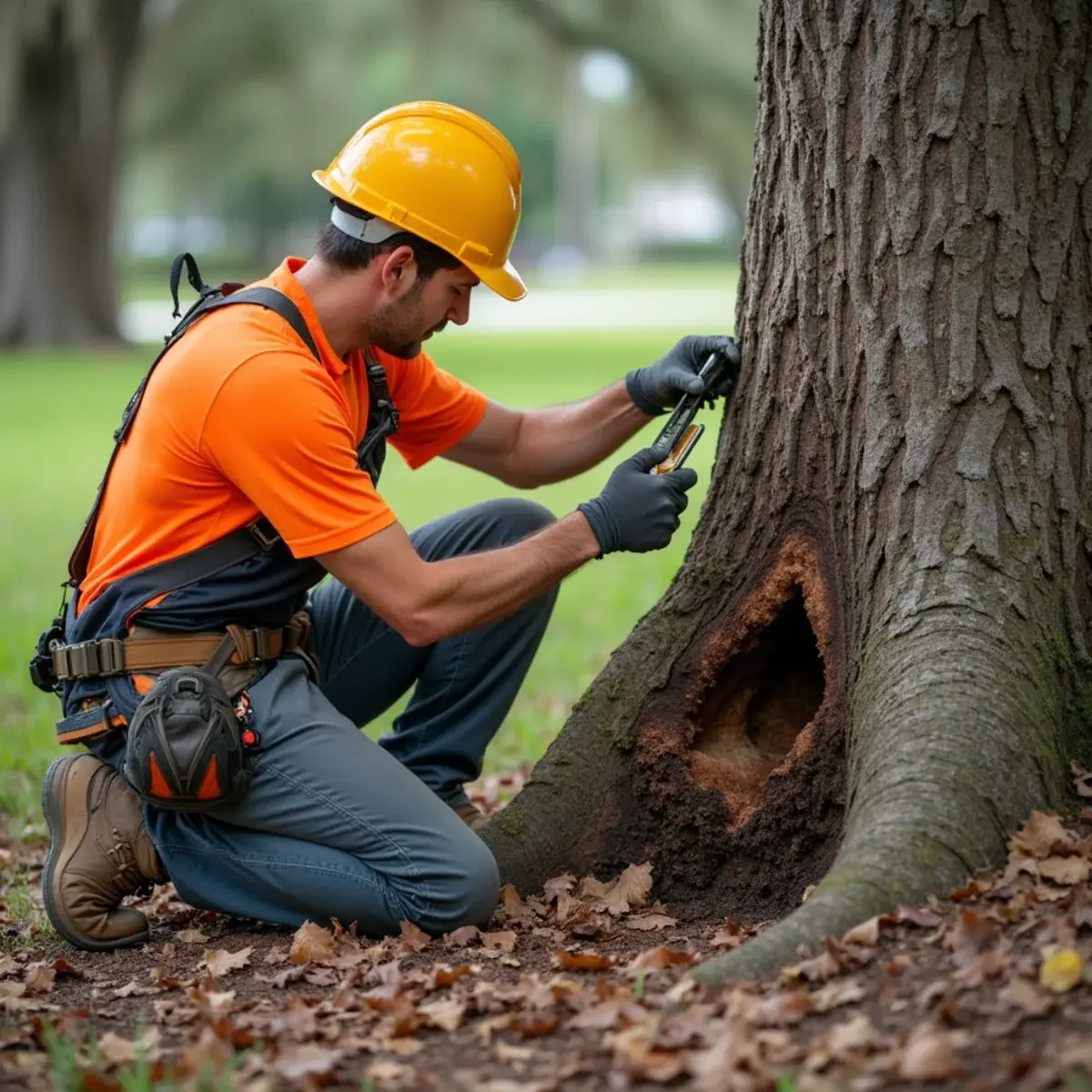
Storm-damaged and imminently hazardous trees are handled differently. Jurisdictions generally allow emergency removal of a tree presenting an immediate danger, but they still want documentation, and "it looked bad" is not documentation. Photograph the tree before anything is cut, from several angles, showing the failure. We do this on every emergency call for exactly that reason.
If a tree has already been removed without a permit — a previous owner, a contractor who did not check, or a genuine misunderstanding — do not ignore the notice. These cases are usually resolvable through after-the-fact permitting and mitigation. We have helped homeowners through that process, and it goes far better when someone documents the situation properly rather than hoping it goes away.
How permit help works, step by step
Why choose Have Faith Trees for permit help
No competitor around here offers this
We check before quoting, not after
Mitigation planned to reduce cost
After-the-fact cases handled too
What affects the price
Permit Help questions we get asked
Related tree services
Further reading
Book permit help in St. Augustine
Free on-site estimate, written price before we start, and full cleanup included. Same-day response for genuine hazards.
- 47 five-star reviews
- Licensed & insured
- 24/7 storm response