Short answer
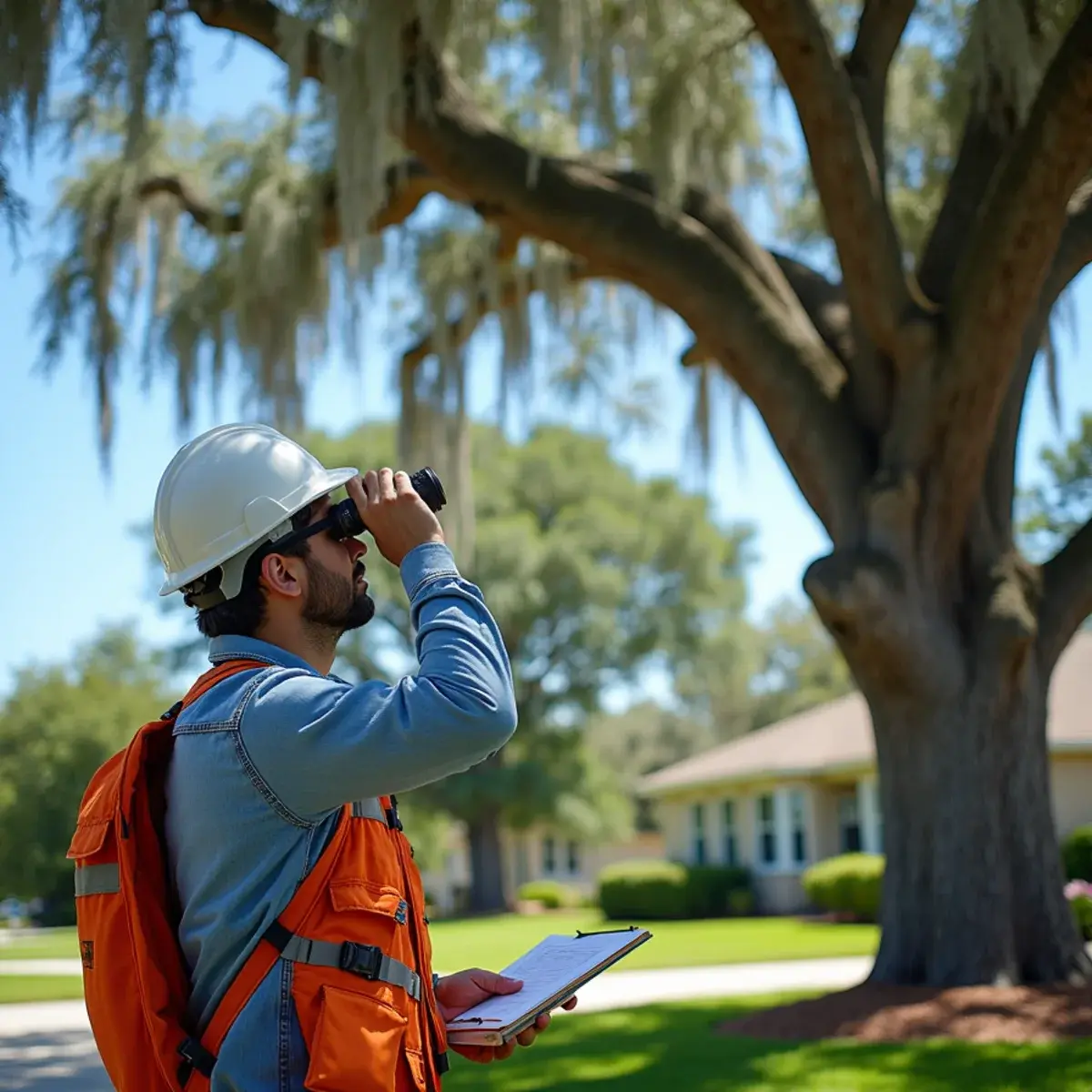
Storm-risk indicators we look for on every property
What’s included with hurricane tree preparation
Free estimate for hurricane prep in St. Augustine
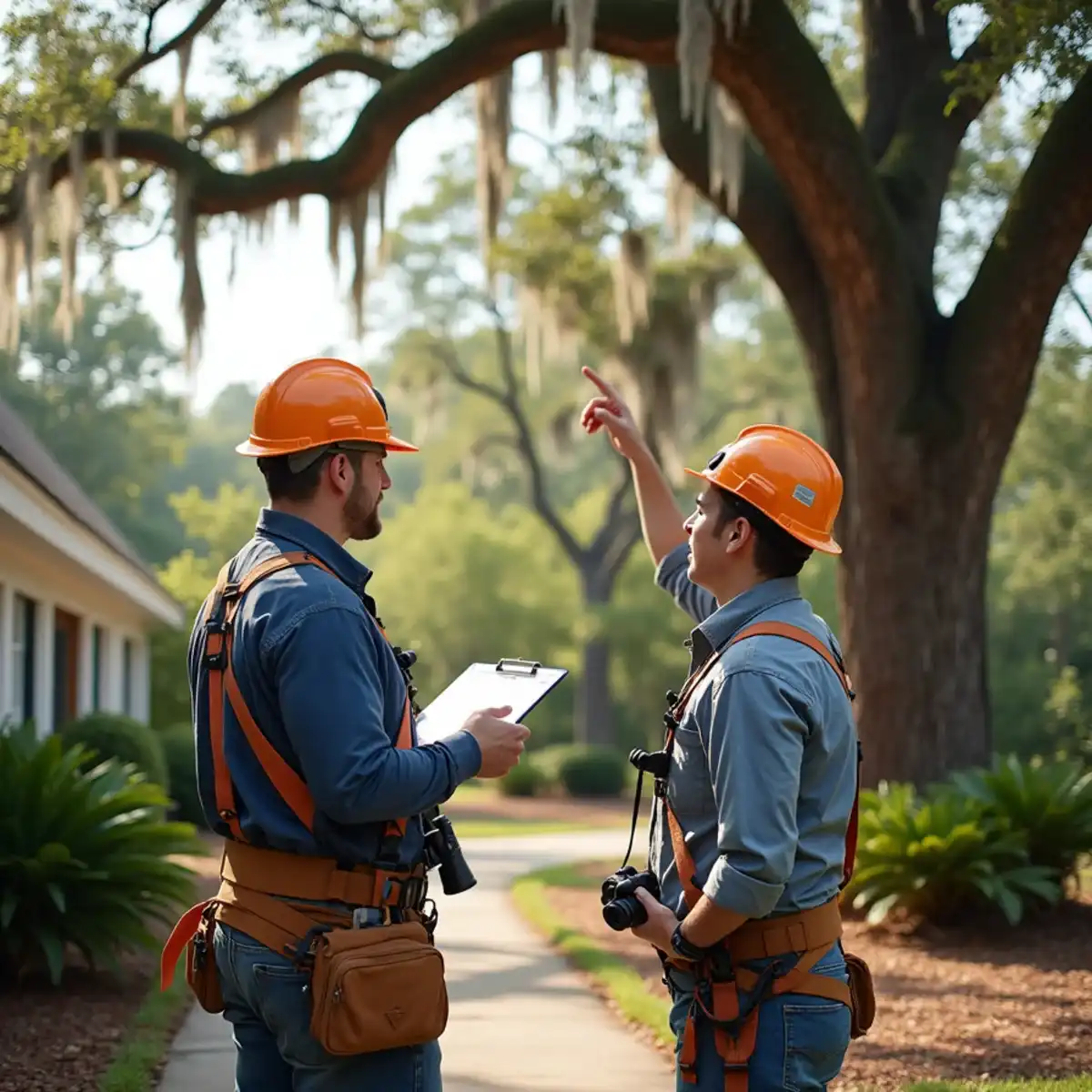
Hurricane Prep on the job in St. Augustine
Our pre-season countdown for St. Augustine properties
Hurricane season starts June 1. Working backward from that date gives you a realistic schedule.
What actually fails in a Florida windstorm
After enough storm cleanups you start to see the pattern. Whole-tree uprooting almost always happens in saturated soil — days of rain first, then wind. Shallow-rooted species and trees with restricted root zones (a lawn surrounded by driveway, sidewalk, and slab) go first.
Trunk snapping is a pine and decayed-hardwood story. A pine that lost its top in a previous storm, or an oak with a decay column running up from an old wound, breaks in the middle rather than tipping over.
Limb failure is the most common and the most preventable. It is almost always deadwood, an over-extended horizontal, or a codominant union splitting. All three are visible from the ground to someone who knows what to look for, and all three are fixable in an afternoon.
One thing we cannot fix is a tree in the wrong place. If a 90-foot pine leans over your child’s bedroom and has decay in the butt, the honest recommendation is removal, and we will say so plainly instead of selling you a trim that will not change the outcome.
Weight reduction done right — not "hurricane cutting"
You will see companies advertise "hurricane cuts" this time of year. What that usually means is topping — cutting the canopy back to stubs. It is the worst thing you can do to a tree. Topped trees respond with dozens of fast-growing water sprouts attached only to the outer bark, so within three to five years you have a taller tree with weaker attachments than the one you started with, plus decay entering every stub cut.
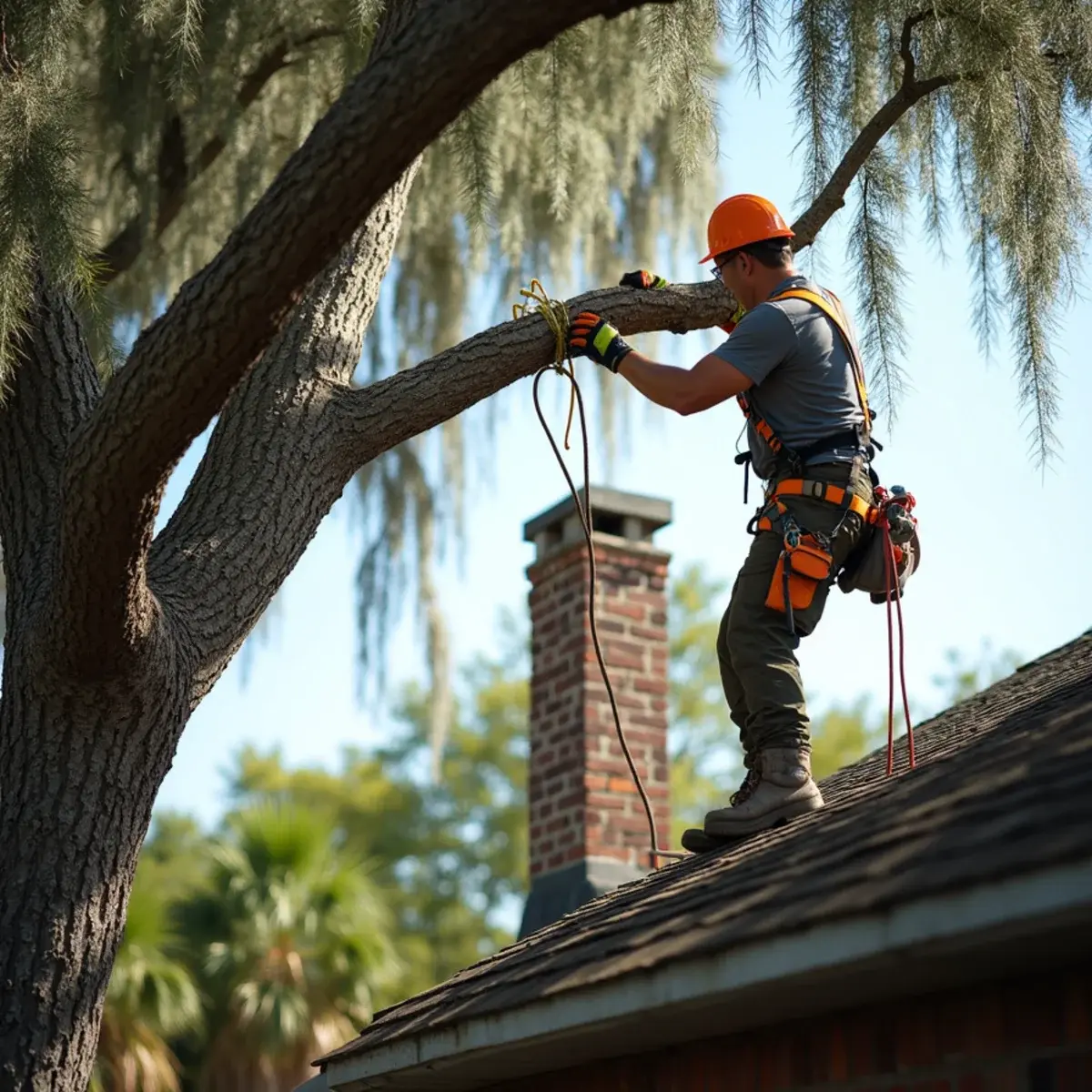
Proper storm-risk reduction is different work entirely. We shorten over-extended limbs by cutting back to a suitable lateral branch that can take over as the new terminal. We thin selected interior branches so the canopy is porous. We remove every piece of deadwood. The tree keeps its natural shape and structure while losing the leverage that breaks limbs.
For high-value trees with a structural defect worth preserving — a historic live oak with a split fork, for instance — a steel or synthetic cabling system can hold the union together. That is covered on our tree cabling and bracing page.
The written report you keep
Every hurricane prep visit ends with a short written summary: which trees were worked, what was removed, what we flagged for the future, and anything we consider a genuine hazard. It is plain English, not a lab report.
Two reasons that matters. First, it gives you a maintenance plan rather than a one-off invoice. Second, if a tree does fail later, documentation showing you had the property professionally inspected and maintained is exactly what an insurance adjuster or a neighbor’s attorney will ask for. Documented maintenance is a defense; "I never got around to it" is not.
How hurricane prep works, step by step
Why choose Have Faith Trees for hurricane prep
Prevention costs a fraction of the emergency
Proper reduction, never a hurricane cut
Priority scheduling when it counts
Honest about what prep cannot do
What affects the price
Hurricane Prep questions we get asked
Related tree services
Further reading
Book hurricane prep in St. Augustine
Free on-site estimate, written price before we start, and full cleanup included. Same-day response for genuine hazards.
- 47 five-star reviews
- Licensed & insured
- 24/7 storm response