Short answer
Signs your palms are due for attention
What’s included with palm tree trimming & removal
Free estimate for palm tree care in St. Augustine
Palm Tree Care on the job in St. Augustine
The 9-and-3 rule, and why over-pruning hurts
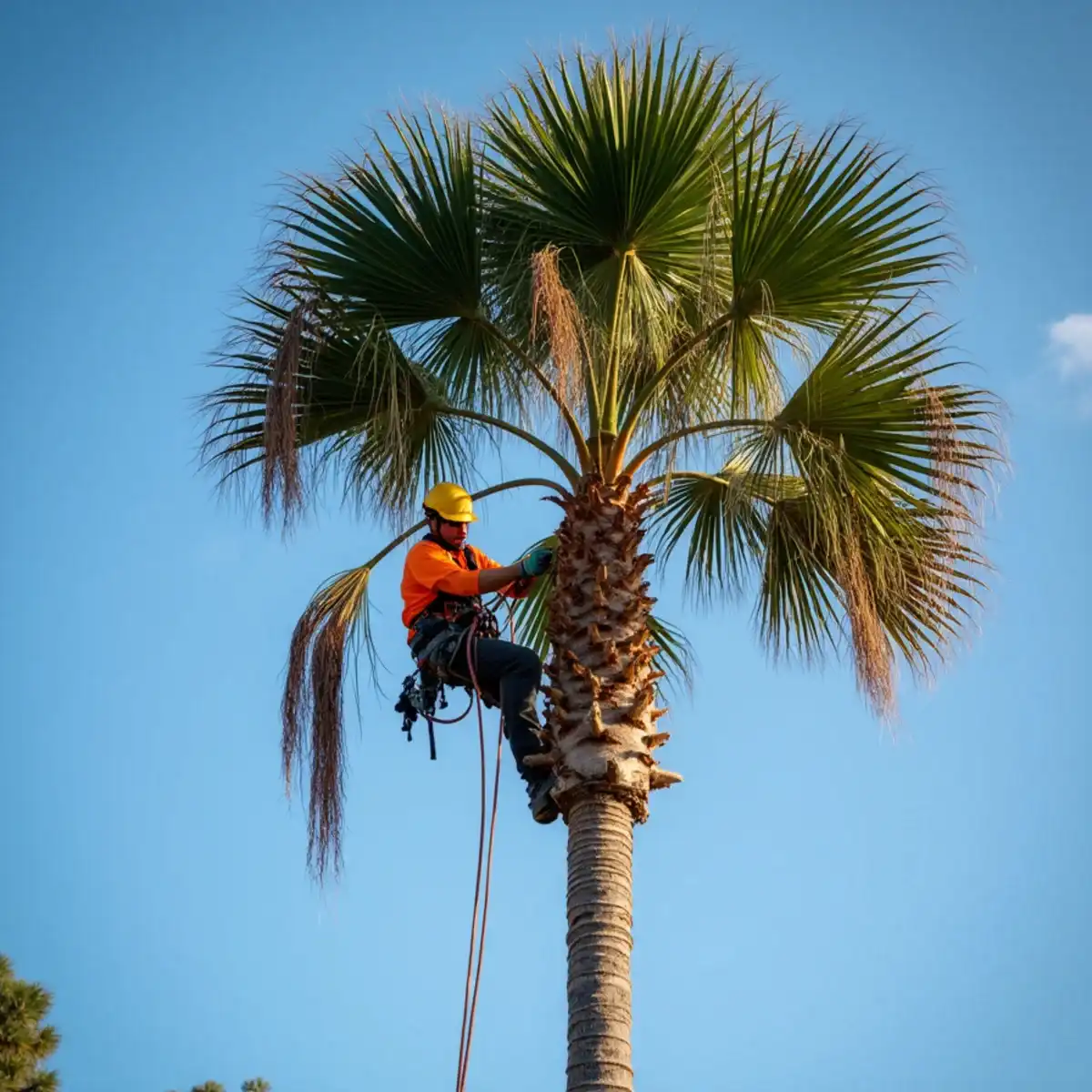
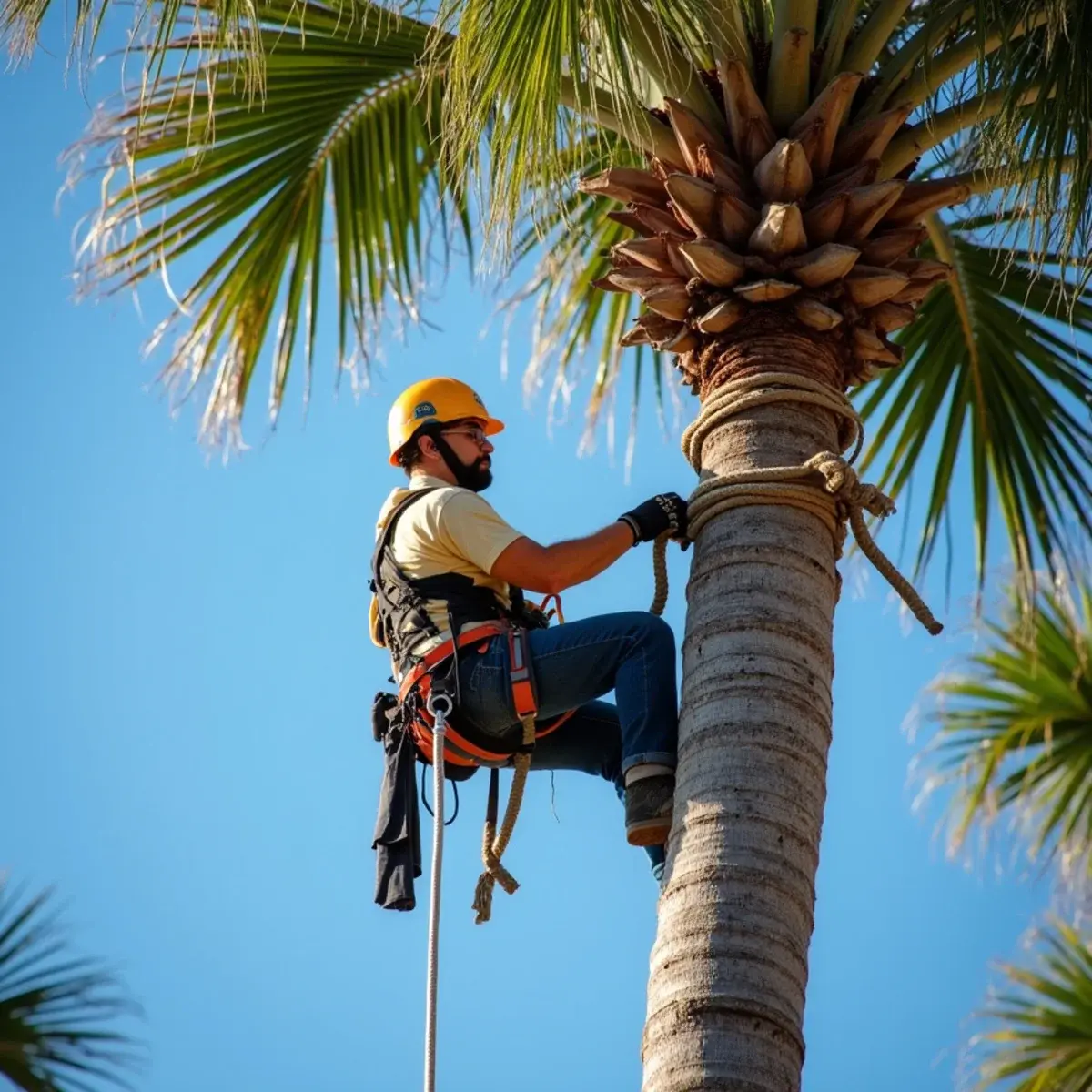
The standard we work to is simple: never remove fronds that sit above the horizontal — imagine a clock face, and leave everything between 9 o’clock and 3 o’clock. Anything hanging below horizontal is fair game, along with fully dead fronds, seed pods, and loose boots.
Cutting into that 9-to-3 zone does real harm. Palms have a single growing point at the top of the trunk, and green fronds are the only food source they have. Over-pruned palms grow thinner trunks, become more susceptible to cold damage and nutrient deficiency, and — counter to what people believe — actually fail more often in hurricanes, because the remaining fronds cannot shield the bud and the narrowed trunk section is a weak point for years.
There is also a practical concern: a palm has no ability to compartmentalize wounds the way a hardwood does. Every cut into the trunk is permanent, and dirty tools spread fatal diseases like fusarium wilt from palm to palm. We sanitize between trees for that reason.
The palms we work on around St. Johns County
The coast throws a specific palette of palms at us, and each one gets handled differently.
Palm removal and the diseases that force it
Some palms come out because they were planted too close to a foundation or a pool deck. Many come out because of disease, and palm diseases are usually terminal.
Ganoderma butt rot
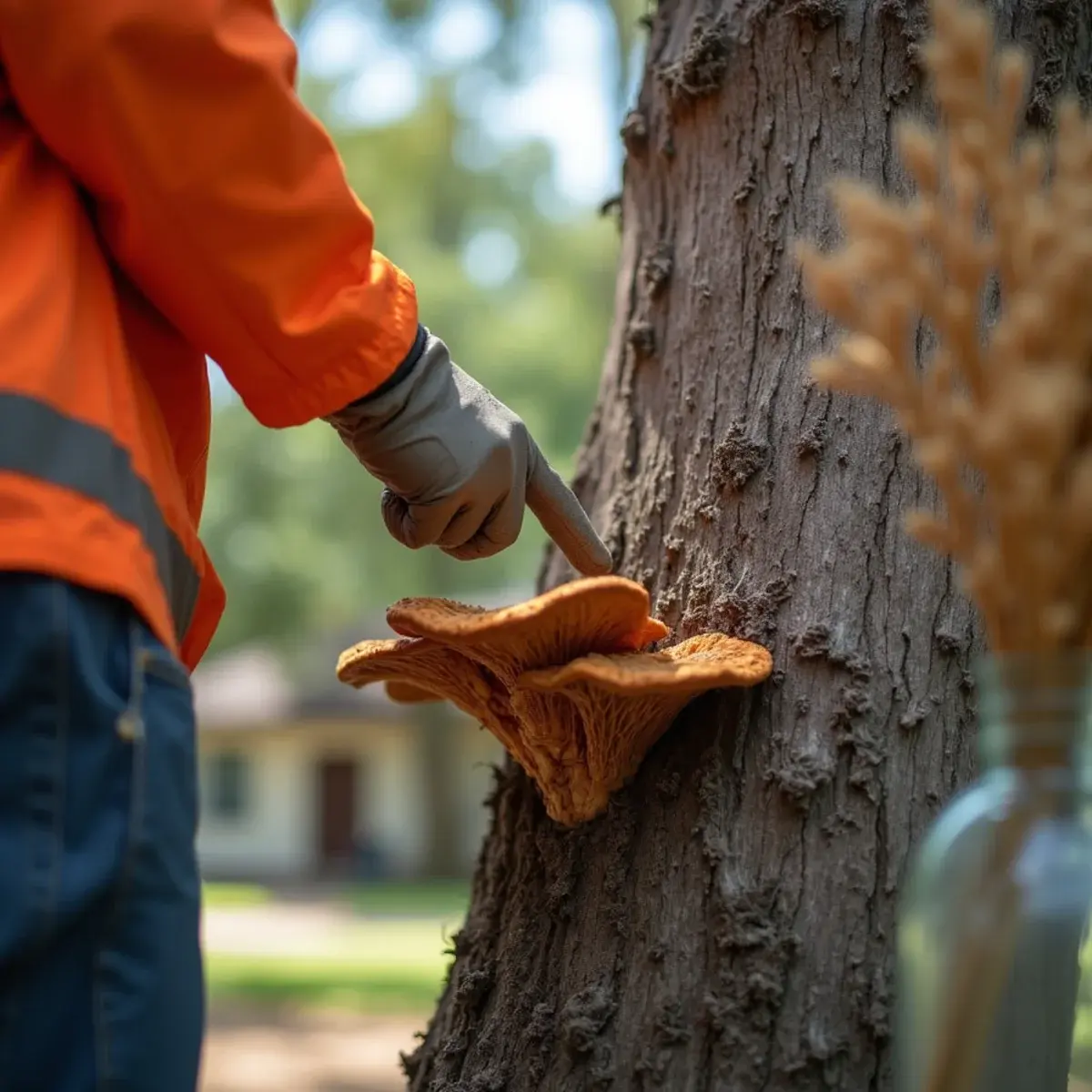
The most common killer of mature palms in Northeast Florida. You will see a hard, shelf-like conk with a shiny reddish-brown top forming low on the trunk. There is no treatment and no cure. Once the conk appears, the interior of the lower trunk is already decayed and the palm is a falling hazard. It needs to come out, and the spores persist in the soil, so we advise against replanting another palm in the same spot.
Bud rot and lethal bronzing
A collapsing spear leaf is an emergency sign. Bud rot follows storm flooding and cold damage; lethal bronzing is a phytoplasma spread by insects and moves through neighborhoods. Both kill quickly. Early diagnosis occasionally allows antibiotic treatment for lethal bronzing on high-value palms — but once the spear collapses, the palm is gone.
Nutrient deficiency
Not everything that looks like disease is disease. Potassium deficiency produces yellow-orange spotting on the oldest fronds; manganese deficiency ("frizzle top") deforms the newest ones. Both are fixable with the right palm-specific fertilizer, and diagnosing them correctly can save a palm someone else told you to remove.
Getting palms ready for hurricane season
Palms handle wind better than nearly any tree we work on — that flexible trunk and shredding frond design evolved for exactly this. What they do not handle is being loaded with dead fronds and heavy seed pods that turn into projectiles at 80 miles an hour.
A pre-season palm service is quick and cheap: strip the dead fronds, take off the seed stalks, clear anything hanging below horizontal, and inspect the trunk base for conks. We schedule most residential palm work between March and May for exactly this reason. If you want the full pre-season plan for the rest of your trees too, our hurricane preparation service covers the property as a whole.
How palm tree care works, step by step
Why choose Have Faith Trees for palm tree care
We refuse the pineapple cut
Ganoderma caught early
Yellow fronds diagnosed, not just cut
Coastal palms are most of what we do
What affects the price
Palm Tree Care questions we get asked
Related tree services
Further reading
Book palm tree care in St. Augustine
Free on-site estimate, written price before we start, and full cleanup included. Same-day response for genuine hazards.
- 47 five-star reviews
- Licensed & insured
- 24/7 storm response