Short answer
When it is worth having a tree looked at
What’s included with tree health & risk assessment
Free estimate for tree assessment in St. Augustine
Tree Assessment on the job in St. Augustine
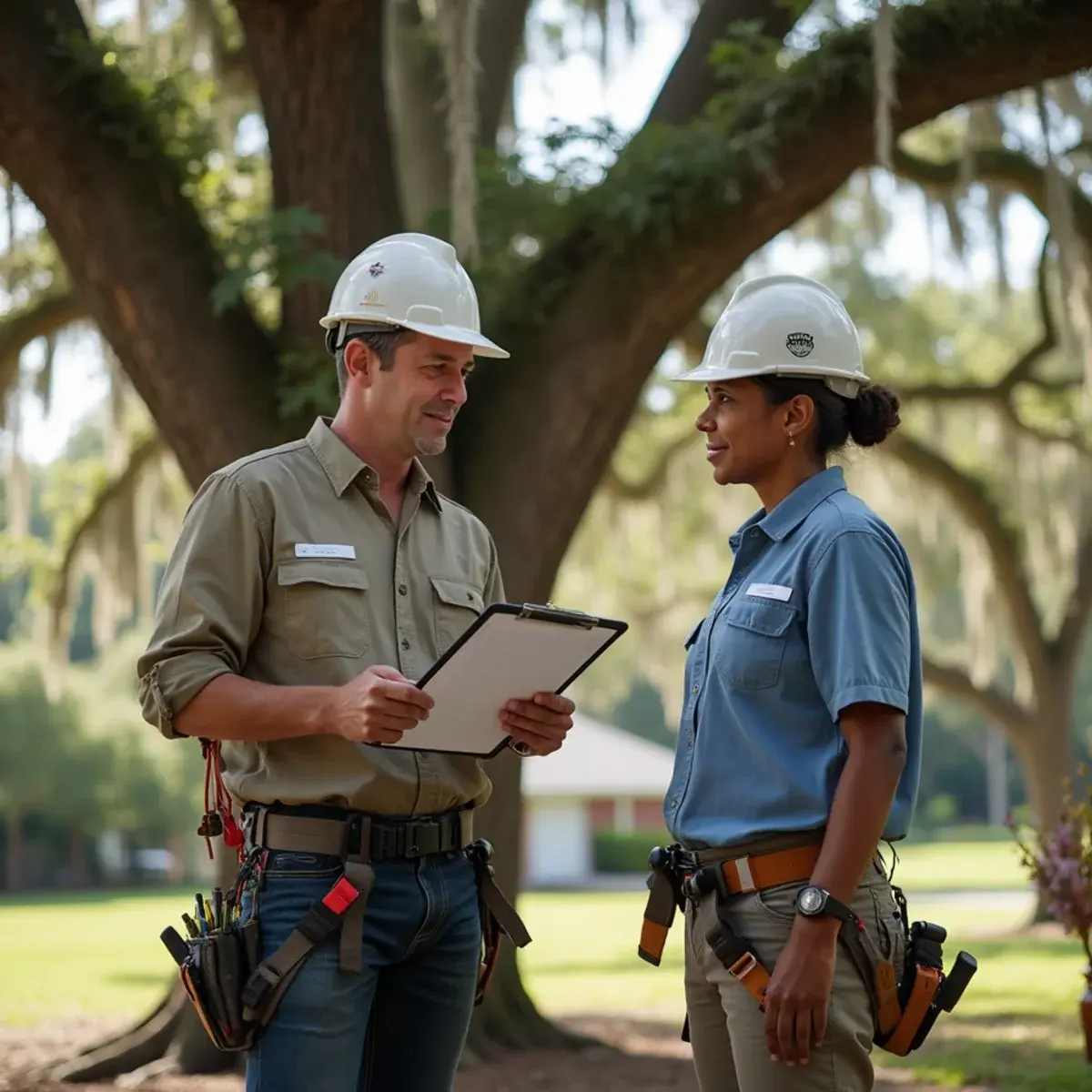
What the inspection covers
We work from the ground up, because most fatal problems start below eye level.
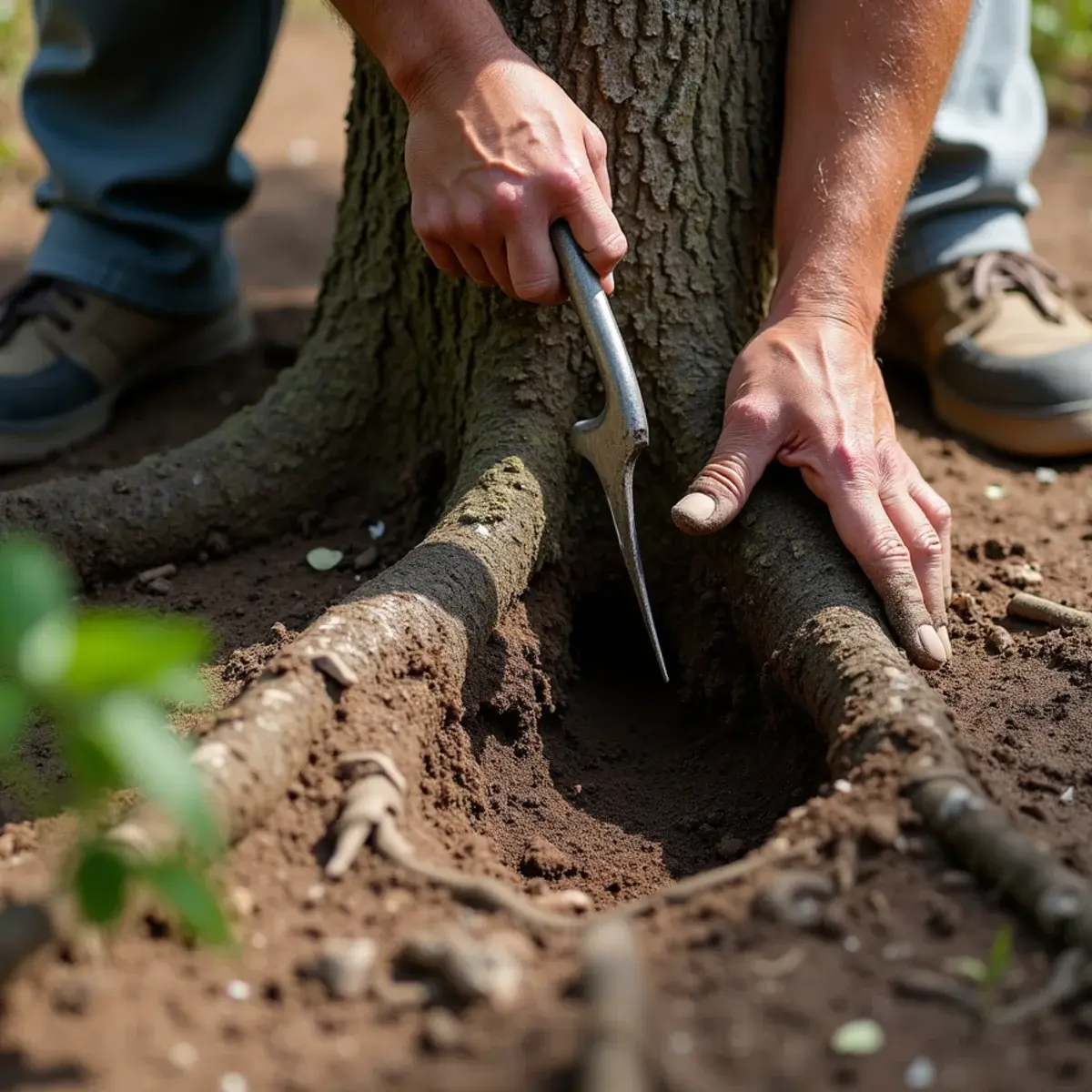
Roots and root collar
We excavate leaf litter and mulch away from the trunk flare and look for girdling roots, decay, mechanical damage, and soil heaving. A buried root collar — extremely common where sod and mulch have been piled against a trunk for years — causes rot right at the point where the tree needs the most strength. Cut roots from construction show up years later as canopy dieback on the same side.
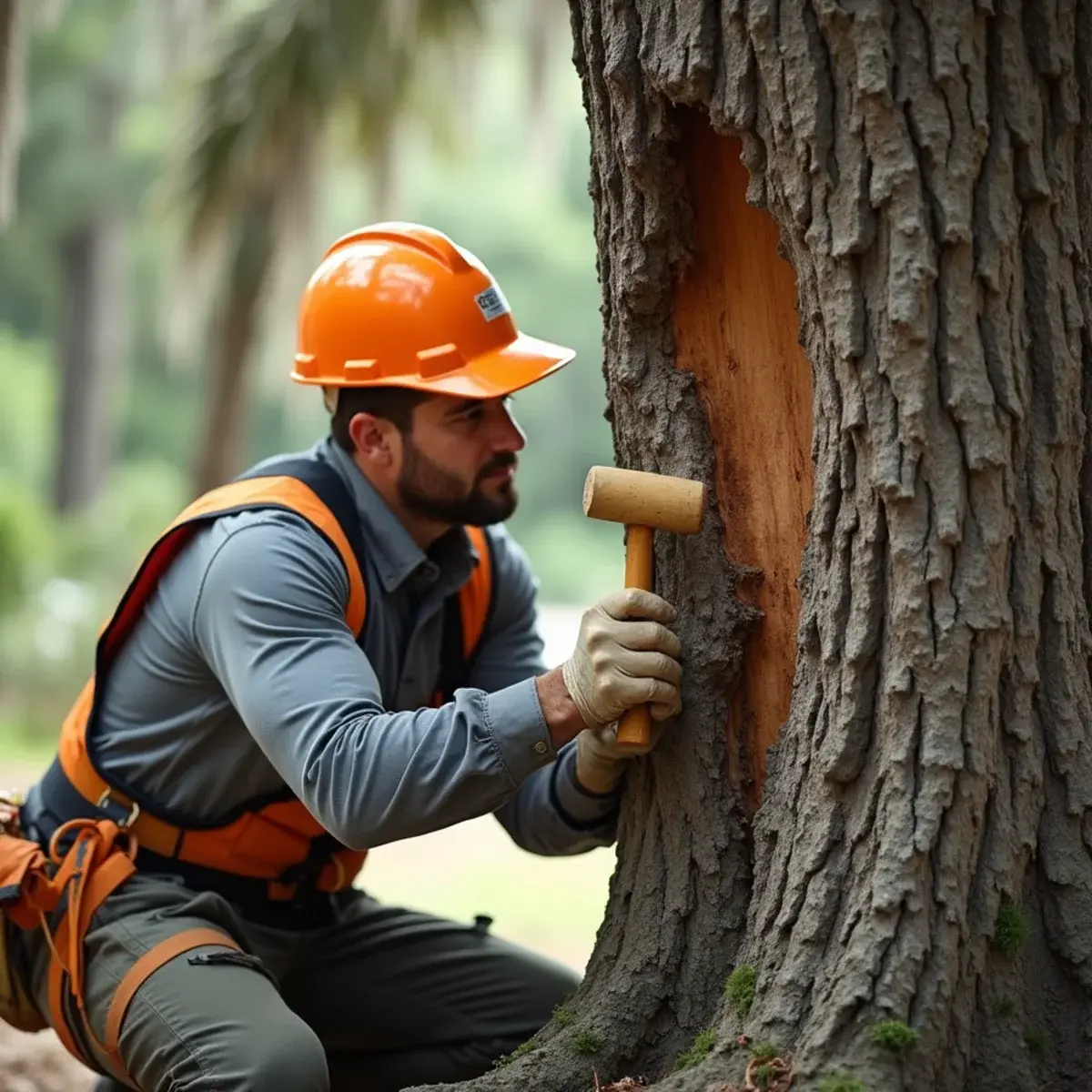
Trunk and unions
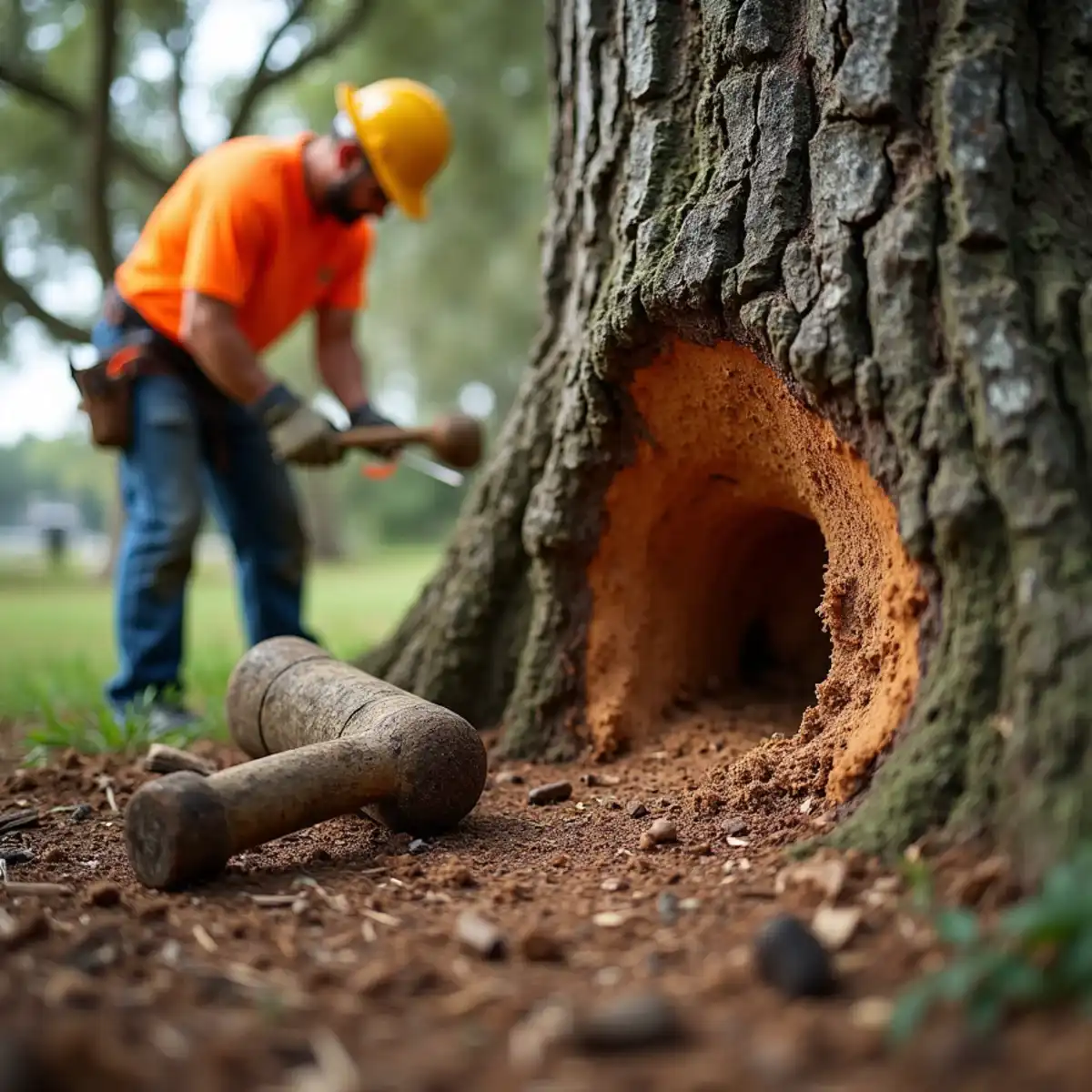
Sounding the trunk with a mallet locates hollows. We look for decay fungi, cracks, seams, old topping wounds, included bark at forks, and the shell-thickness rule of thumb: once decay consumes enough of the cross-section, the remaining wall cannot carry the load.
Canopy and branch structure
Deadwood volume, dieback pattern, over-extended limbs, previous failures, and how the tree has responded to them. Dieback that starts at the top usually means a root or vascular problem; dieback scattered through the interior is often just shading and normal.
Site and target
Risk is not only about the tree. A hollow oak in the back of five acres is a wildlife feature; the same tree over a bedroom is a problem. We assess what is under the tree, how often people are there, and what the realistic failure would hit.
What you get back
You get a written summary with photographs: what we found, how severe it is, what we recommend, and a rough timeline. Recommendations fall into a few buckets — monitor and re-inspect, prune to reduce specific risk, install support hardware, treat a pest or disease, mitigate the target, or remove.
If we recommend removal, the report says why in terms you can hand to an HOA board, an insurance carrier, or a permitting office. St. Augustine and St. Johns County both require documentation for the removal of regulated trees, and a written arborist assessment is usually the thing that gets a permit approved.
Second opinions and the removal-first industry
Tree companies make money removing trees. That creates an obvious incentive problem, and homeowners are right to be skeptical when the first company through the door quotes a $4,000 takedown on a tree that looks fine.
Some trees genuinely need to come down. Plenty do not. A tree with a hollow trunk can be perfectly sound if the shell is thick enough. A tree that dropped a limb may just need the rest of its deadwood cleaned out. A dying-looking oak in August might be drought-stressed and fine by spring. The difference between those cases and a real hazard is diagnosis, not intuition.
That is why we charge for assessments as a standalone service instead of bundling them into a sales visit. When the inspection is the product, there is no reason to find a problem that is not there. If the assessment leads to work you hire us for, the inspection fee comes off that invoice.
Common diagnoses in Northeast Florida
A few conditions account for most of what we find on St. Johns County properties.
How tree assessment works, step by step
Why choose Have Faith Trees for tree assessment
The diagnosis is the product
Second opinions are a real part of the job
Hollow does not mean doomed
Documentation that gets permits approved
What affects the price
Tree Assessment questions we get asked
Related tree services
Further reading
Book tree assessment in St. Augustine
Free on-site estimate, written price before we start, and full cleanup included. Same-day response for genuine hazards.
- 47 five-star reviews
- Licensed & insured
- 24/7 storm response