Have Faith Trees — tree service in St. Augustine, FL
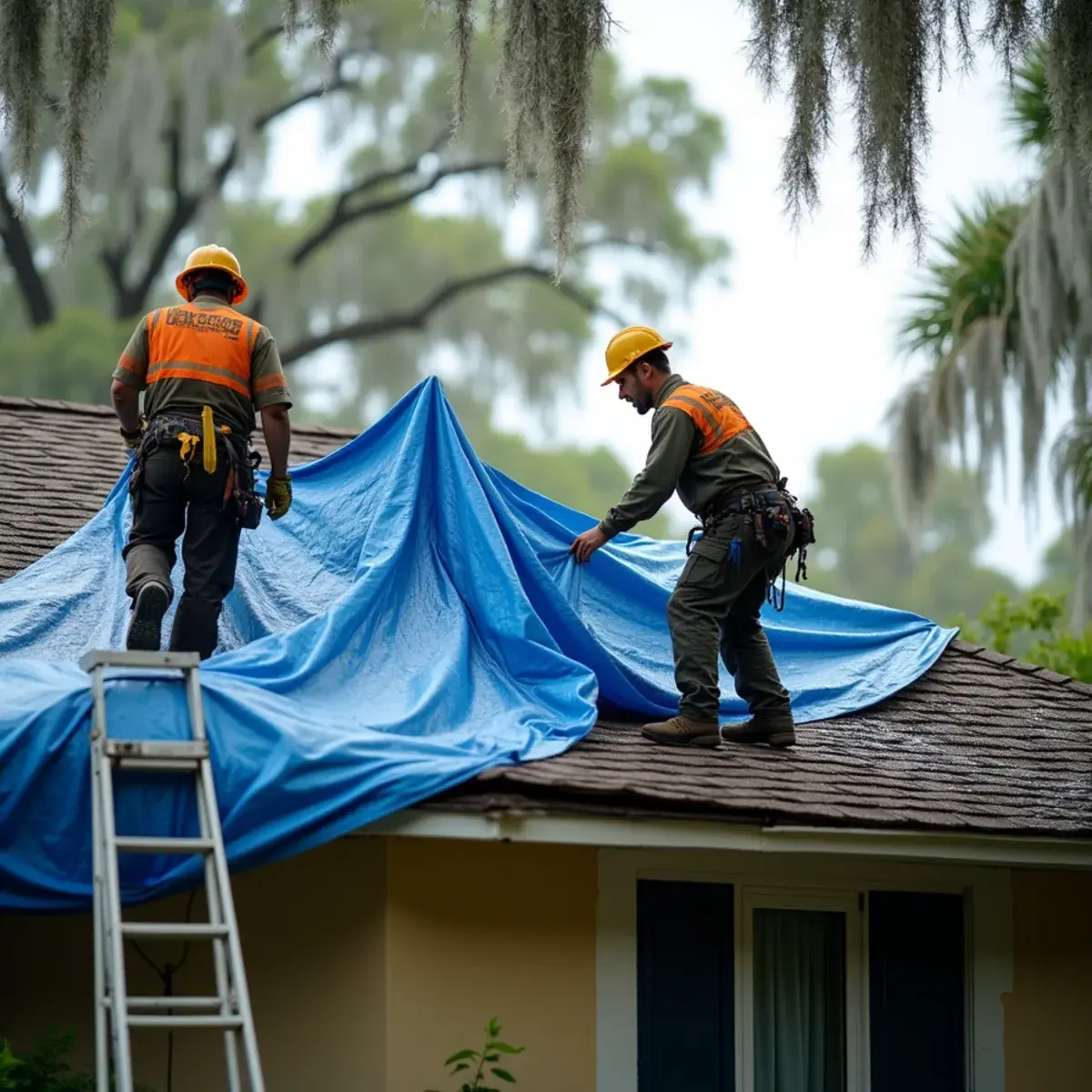
Emergency crew clearing a storm-damaged tree from a roof in St. Augustine, FL after a hurricane

St. Augustine, FL

Emergency Tree Service in St. Augustine, FL

When a tree comes down on your house at midnight, you need two things: someone who answers the phone, and someone who knows how to take weight off a structure without making the damage worse. That is what this service is.

  • 24/7 storm phone line
  • Insurance documentation provided
  • Tarping and make-safe
  • Fully insured crews

Short answer

Emergency tree service in St. Augustine means same-day response for a genuine hazard — a tree on a structure, an uprooted trunk, or a limb hung up over a walkway — and 24/7 phone coverage during and after storms. Have Faith Trees makes the site safe first, relieves the load in sections from the top down, tarps where the roof is opened, and photographs everything before cutting so your adjuster has what they need.

Have Faith Trees runs emergency response across St. Johns and Flagler counties during and after tropical systems, severe thunderstorms, and the straight-line wind events that regularly move through Northeast Florida. Call the number, describe what happened, and we will tell you honestly how fast we can be there.

Call immediately if any of this is happening

  • A tree or large limb is resting on your roof, car, fence, or pool enclosure
  • A tree has uprooted and the root plate has lifted the ground — it can shift again without warning
  • A broken limb is hung up in the canopy above a walkway, driveway, or play area
  • A tree is leaning against or has contacted a power line — call the utility first, then us
  • A trunk has split at a fork and the halves are separating
  • A fallen tree is blocking your driveway or the only access to your property
  • A tree suddenly leaned after heavy rain, with cracked or heaved soil at the base

What’s included with emergency & storm damage tree service

Every line below is part of the quoted price. No hidden fees, and nothing discovered halfway through the job.

  • A straight answer on the phone about how fast we can actually be there — not a promise we cannot keep
  • Site made safe first: work zone established, energized lines and gas service identified before anything is cut
  • Load relieved in sections from the top down, with anything bearing on a structure lifted rather than dropped
  • Dated photographs from several angles before we cut — the tree in place, the point of failure and the damage
  • Tarping and make-safe where the roof is opened, so you are dry before the next band of rain
  • A written scope and an itemized invoice separating emergency make-safe work from full removal and cleanup

Typical timeline

Same day for a genuine hazard on an ordinary day. During a widespread storm event we triage — structures and blocked access first, yard debris after — and tell you honestly where you fall in the queue.

Quoted separately

  • Anything in contact with primary power conductors until FPL or JEA de-energizes it — that is utility work first
  • Roof, screen or structural repair — we make safe and document; your contractor rebuilds

Free estimate for emergency service in St. Augustine

Call +1 (208) 635-2100 and describe the tree, or send the form below and we will get back to you the same day.

  • 47 five-star reviews
  • Licensed & insured
  • 24/7 storm response

Emergency Service on the job in St. Augustine
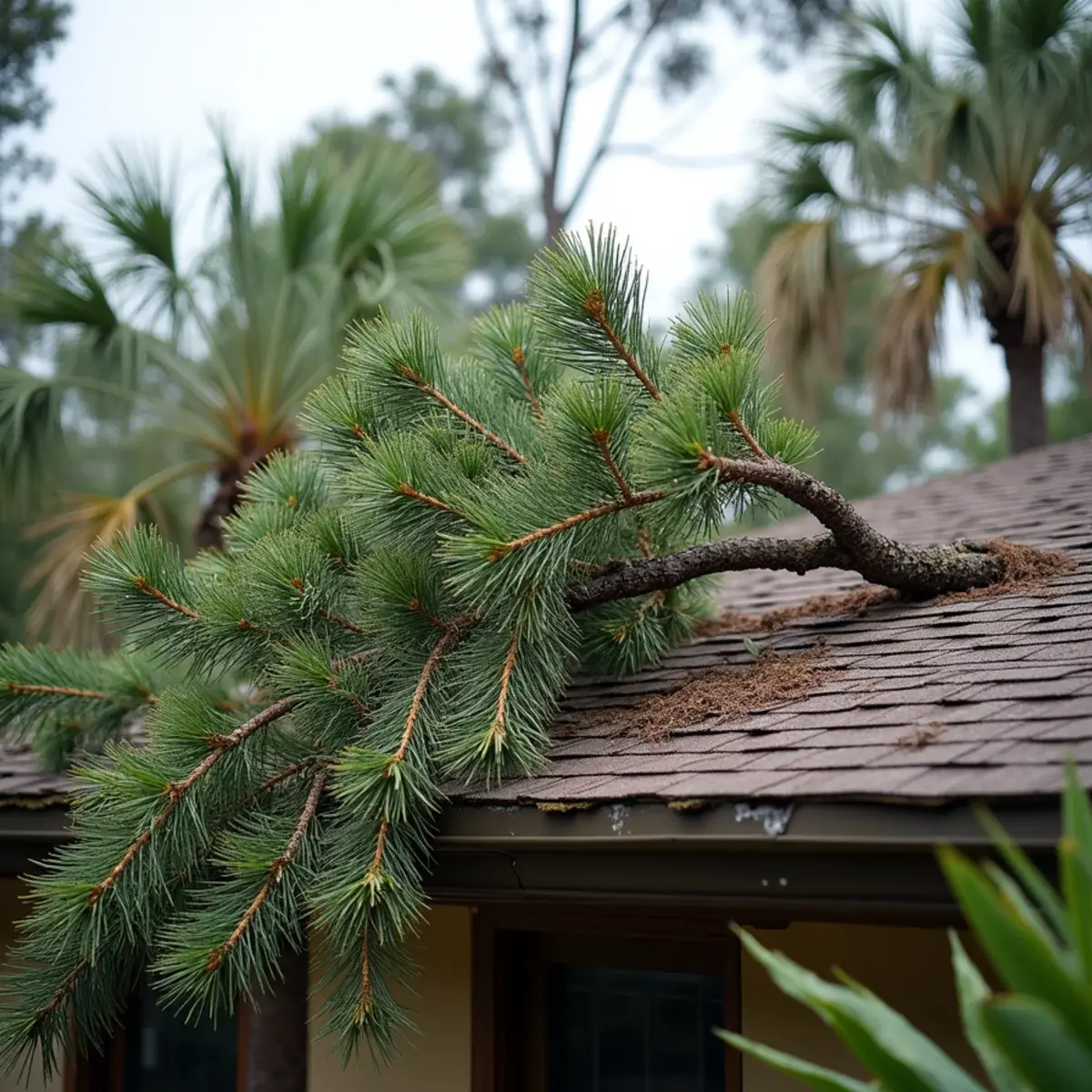
Real work, photographed on St. Johns County properties.

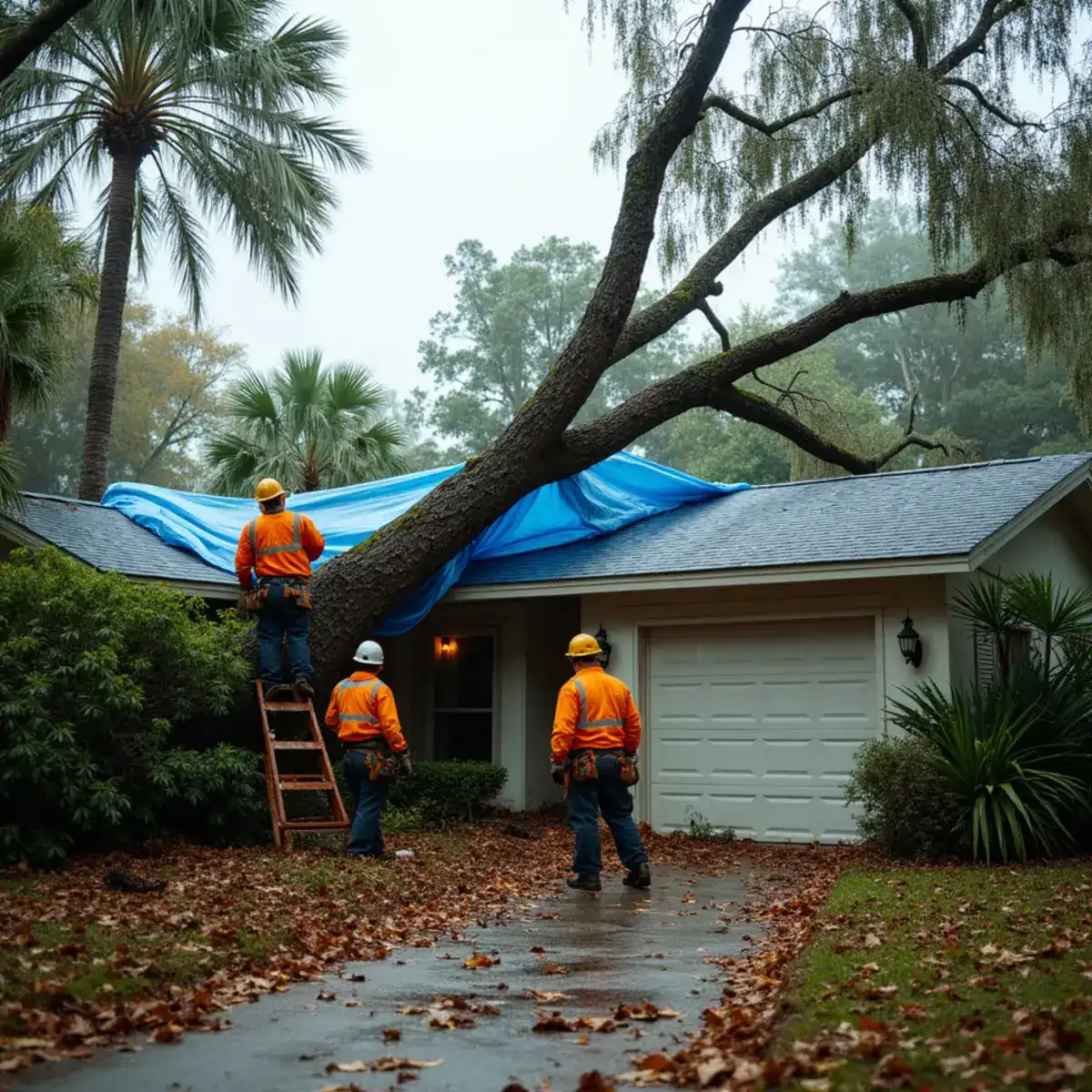
  • Pine across roof, emergency & storm damage tree service in St. Augustine, FL
  • Tarping damaged roof, emergency & storm damage tree service in St. Augustine, FL
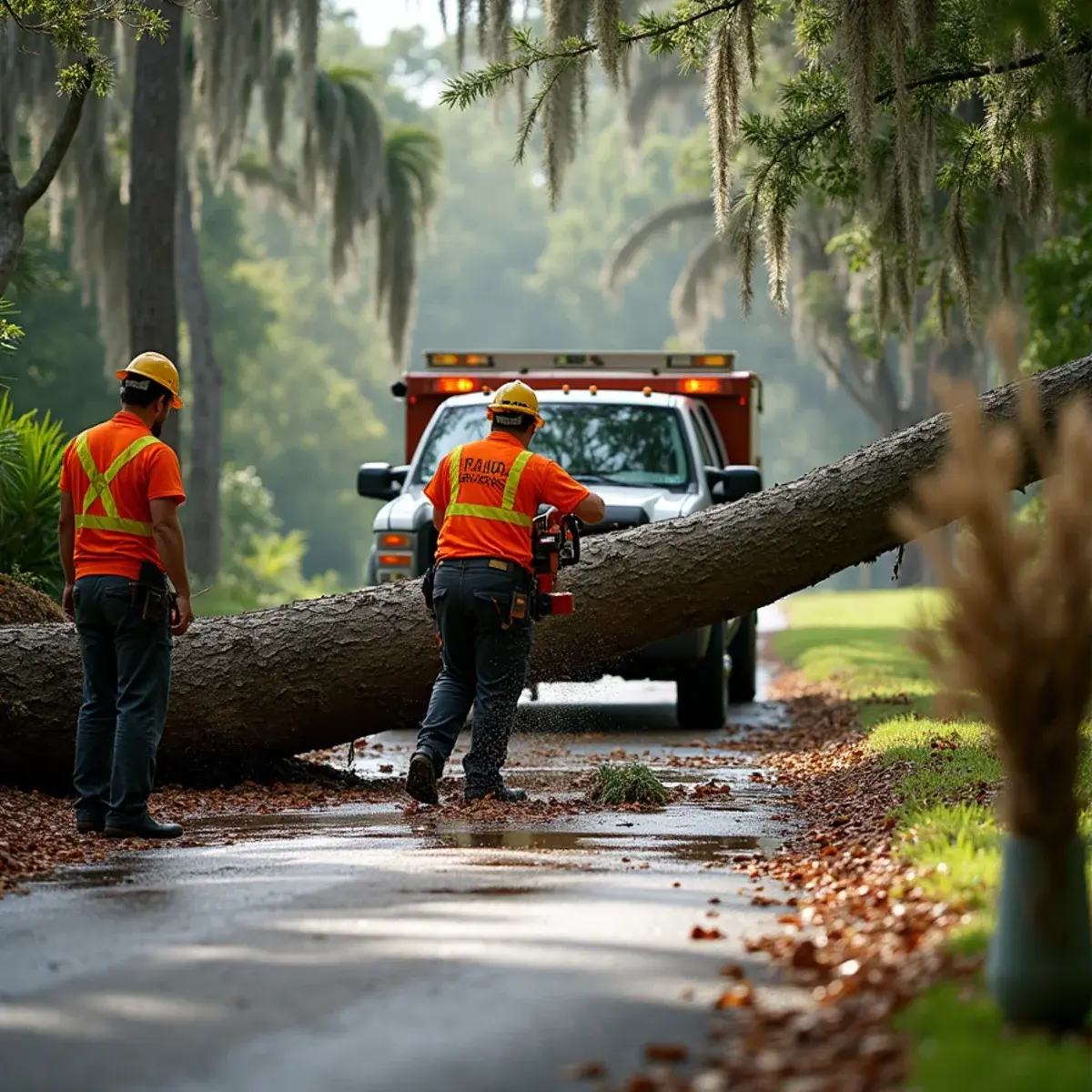
  • Storm debris clearing, emergency & storm damage tree service in St. Augustine, FL

What we do when we arrive

The first move is always to make the site safe, not to start cutting. We establish a work zone, look for energized lines and gas service, and assess where the load is sitting. A tree on a roof is under tension and compression in ways that are not obvious from the ground, and cutting in the wrong order is how a bad situation becomes a much worse one.

From there the work is usually sequenced: relieve the load in sections from the top down, support or crane off anything bearing on the structure, then remove the trunk. Where the roof is opened, we can tarp and make safe so you are dry before the next band of rain arrives.

We photograph everything before we cut. Insurance adjusters want to see the tree in place, the point of failure, and the damage — and after we have cleared it, that evidence is gone. Those photos go to you the same day.

Storm season in Northeast Florida — what we see and when

Hurricane season runs June 1 through November 30, and the St. Augustine area does not need a direct hit to get hurt. Matthew in 2016 and Irma in 2017 both did their damage here from well offshore, and Ian and Nicole in 2022 proved again that a system tracking up the peninsula can put tropical-storm-force gusts and days of saturating rain over St. Johns County.

Saturated sand is the real culprit in most of the failures we respond to. Our soils drain fast but hold poorly under sustained rain, and once the root plate is floating, a laurel oak or slash pine that stood through forty years of storms can go over in a 45-mph gust. That is why the trees that fail are often the ones nobody was worried about.

Outside hurricane season, summer afternoon thunderstorms produce sharp microbursts that snap pine tops and shear over-extended oak limbs. Those calls come in almost weekly from June through September.

Working with your insurance company

Most Florida homeowners policies cover tree removal when the tree damages a covered structure — house, garage, fence, or in some policies a screen enclosure. A tree that falls in your yard and hits nothing is usually your own expense, though some policies include a modest debris-removal allowance.

We do not file the claim for you and we will never tell you what your carrier will pay. What we do is give you what the adjuster asks for: dated photographs from multiple angles, a written scope of the emergency work, and a clear, itemized invoice separating make-safe work from full removal and cleanup. Customers who have that paperwork in hand get through the process considerably faster.

Be careful with out-of-town crews that appear after a storm asking for cash up front or an insurance assignment of benefits. Ask for a Florida license, a certificate of insurance listing the carrier, and a written scope before anyone touches your property.

Before the storm: the calls we would rather get

The honest truth about emergency work is that a lot of it was preventable. The limbs that come through roofs are usually deadwood that had been dead for a year, or over-extended horizontals that any climber would have flagged during a routine trim.

If your trees have not been looked at in the last few years, book an assessment in the spring rather than a rescue in September. A pre-season inspection and a weight-reduction trim cost a fraction of an emergency call-out, and you get to schedule it on a normal Tuesday instead of during a county-wide power outage.

How emergency service works, step by step

The same sequence on every job, so you know what is happening and when.

  1. 01Call answered, honest ETA givenDuring a widespread event the whole county calls at once. You will get a realistic call-back window rather than a promise we cannot keep.
  2. 02Site made safe before any cuttingWork zone established, energized lines and gas service identified. A tree on a roof is under tension in ways that are not obvious from the ground.
  3. 03Everything photographed in placeDated shots from several angles — the tree, the point of failure, the damage. Once it is cleared, that evidence is gone and adjusters work from evidence.
  4. 04Load relieved from the top downSections lifted or lowered rather than dropped, with anything bearing on the structure supported until it is clear.
  5. 05Tarp, make safe, itemizeRoof tarped where it is opened, and a written scope and itemized invoice separating emergency make-safe work from full removal and cleanup.

Why choose Have Faith Trees for emergency service

8+ years on Northeast Florida trees, 47 five-star Google reviews, licensed and fully insured — and these four things specific to this job.

  • We actually answer during storms

    Storm and emergency calls are covered 24/7 through hurricane season, and existing customers get called back first because we already know the property.

  • Documentation your adjuster will accept

    Photographs, written scope and an itemized invoice — the three things that move a claim quickly.

  • We work with the utility, not around it

    Anything in contact with primary conductors is FPL or JEA work first. We will tell you that rather than take a risk on your property.

  • Insured for exactly this work

    Emergency tree work is the highest-risk job in the trade. General liability and workers' comp, certificate on request.

What affects the price

We do not publish flat prices, because an honest tree quote depends on the specific tree in front of us. These are the factors we are weighing when we walk your property.

Urgency and time of day
After-hours, overnight, and active-storm response carries a premium over daytime scheduled work.
Complexity of the failure
A limb across a driveway is straightforward; a pine through a roof structure requires rigging, cranes, and far more time.
Structural involvement
Any tree bearing on a house, pool cage, or vehicle takes longer because everything has to be lifted, not dropped.
Proximity to power lines
Work near energized conductors may require the utility to de-energize first, which affects both timing and cost.
Volume of debris
Whole-tree failures in a mature canopy produce enormous debris loads, especially when county disposal sites are backed up post-storm.
Access after the storm
Blocked roads, saturated ground, and downed lines all slow equipment placement.

Emergency Service questions we get asked

Do you really answer the phone at night during storms?
Yes. During and after severe weather we run an emergency line. If we are on another job, you will get a realistic call-back time rather than a promise we cannot keep — during a major event, the whole county is calling at once and honesty matters more than optimism.
A tree fell on my house. What do I do first?
Get everyone out of the affected part of the house and stay clear of any lines. Call the power utility if wires are involved. Then call us and photograph everything you safely can from a distance. Do not climb on the roof and do not try to cut the tree yourself — storm-loaded wood is under tension and will move when it is cut.
Will my insurance pay for emergency tree removal?
Typically yes when a covered structure is damaged, and typically no when the tree fell in the open. Coverage varies by policy. We supply the photos, written scope, and itemized invoice adjusters ask for so your claim moves quickly.
How fast can you get to me?
On a normal day, often same day for a genuine hazard. During a widespread event we triage — structures and blocked access first, yard debris after — and we will give you a straight answer about where you fall in the queue.
Do you handle trees on power lines?
Contact with primary conductors is utility work and we will direct you to FPL or JEA first. Once the line is de-energized or the tree is clear of the service, we handle the tree.

Related tree services

Further reading

Emergency & Storm Damage Tree Service across Northeast Florida

We run emergency & storm damage tree service jobs throughout St. Johns County and the surrounding coast. Pick your city for local tree notes and conditions.

Book emergency service in St. Augustine

Free on-site estimate, written price before we start, and full cleanup included. Same-day response for genuine hazards.

  • 47 five-star reviews
  • Licensed & insured
  • 24/7 storm response
Call NowFree Quote

47 five-star reviews · Licensed & insured · Free estimates