Short answer
After a storm passes, most people look at the obvious damage — the limb on the driveway, the tree across the fence — and miss the trees that are quietly more dangerous.
This is the walk-through we do on a property after a weather event, and what each finding actually means.
Start with what is over your head
Hangers are the first priority: broken limbs caught in the canopy, still suspended. These are called widow-makers for a reason. They come down without any wind at all, on their own schedule, and they are the leading cause of post-storm injuries to homeowners.
Look up over every place people spend time — driveways, walkways, patios, play areas, where the car parks. If there is a hanger above any of them, stay out of that area and get it removed professionally. Do not throw a rope over it and pull.
Check the ground at the base of every large tree
This is the check almost nobody does and the one that finds the most dangerous trees.
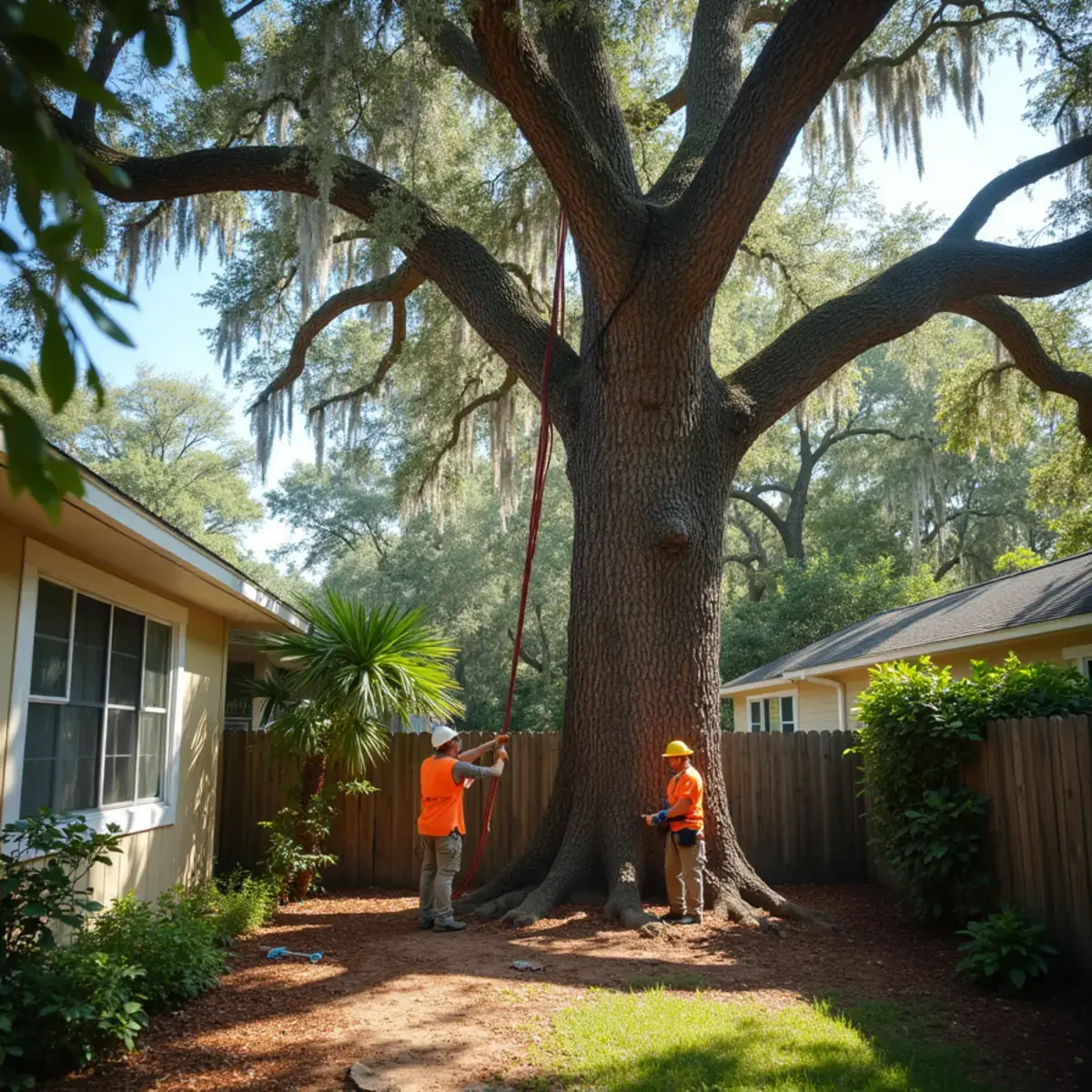
Walk to the base of each significant tree and look at the soil. Cracked, heaved, or mounded soil on one side — usually the side opposite any lean — means the root plate has moved. A tree with a moved root plate is actively failing regardless of how healthy the canopy looks, and it will not recover its anchorage.
Also check whether a tree leans more than it used to. Photographs from before the storm help enormously here, which is one reason we tell people to photograph their property in May.
Reading the damage: what can be saved
Not every damaged tree is finished. The distinction comes down to how much healthy structure remains.
The trees that fail later
The most useful thing about a post-storm walk is finding the damage that has not caused a problem yet.
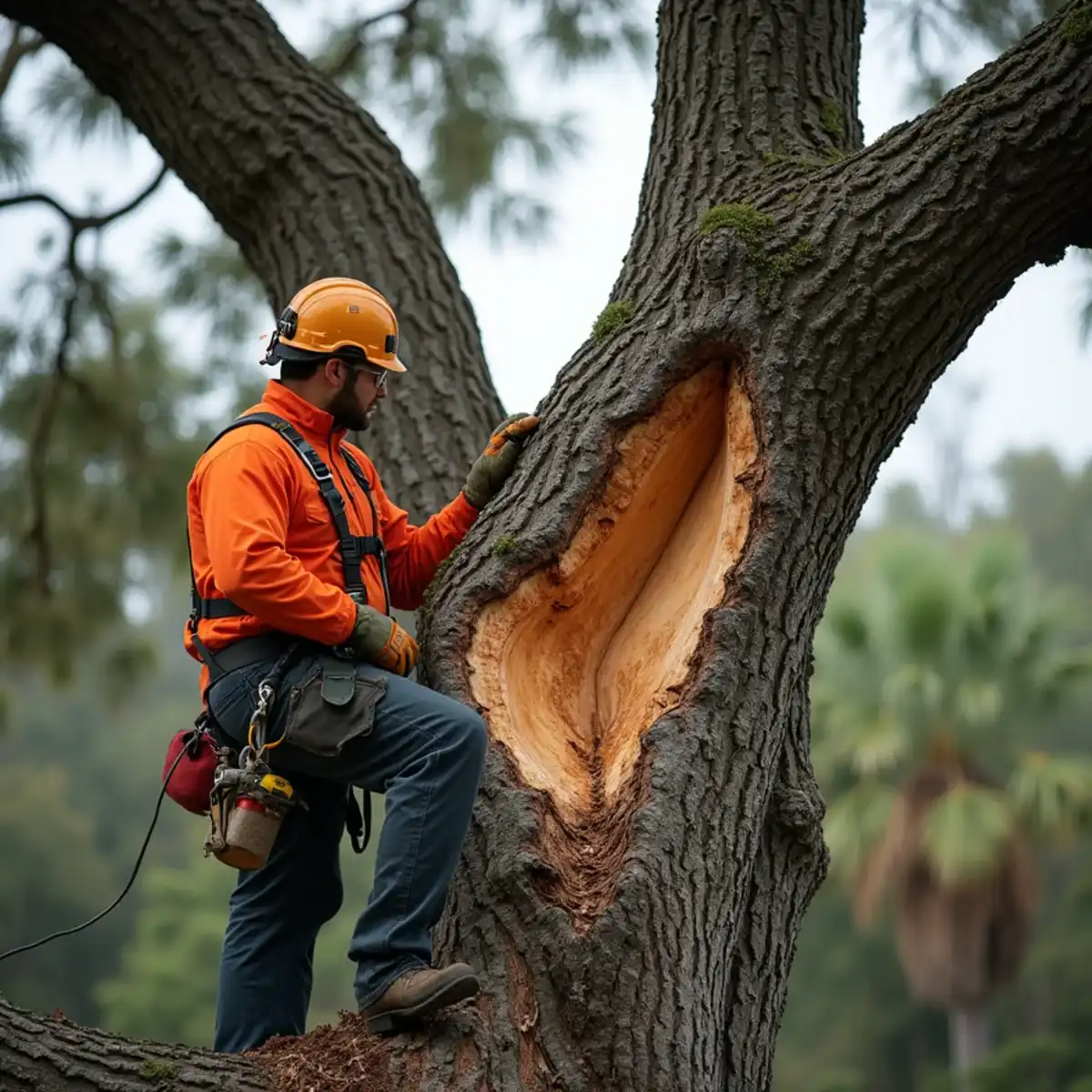
Torn limb attachments that are still hanging on. Cracks in unions that have not opened fully. Root damage from soil movement that has not translated into a lean yet. Bark torn away from a section of trunk. All of these are failures in progress, and all of them are far cheaper to address now than after the next system.
Also pay attention to trees that were suddenly exposed. If a storm took down the trees that were sheltering yours, the survivors are now bearing wind loads they have never experienced, and they are disproportionately likely to fail next time.
What not to do
Do not top a damaged tree to "even it out." A tree that lost limbs on one side is not helped by removing the healthy ones on the other. Corrective reduction over a couple of seasons is the right approach.
Do not paint or seal wounds. Wound dressings trap moisture and interfere with the tree’s natural compartmentalization process. A clean cut is the treatment.
Do not fertilize a storm-damaged tree immediately. A stressed tree does not need to be pushed into growth it cannot support. Water and time are more useful.
And do not cut anything under tension yourself. Storm-loaded wood moves when it is cut, and that is where the serious injuries happen. Our emergency tree service handles that work with the rigging it requires.
Documentation, while it is fresh
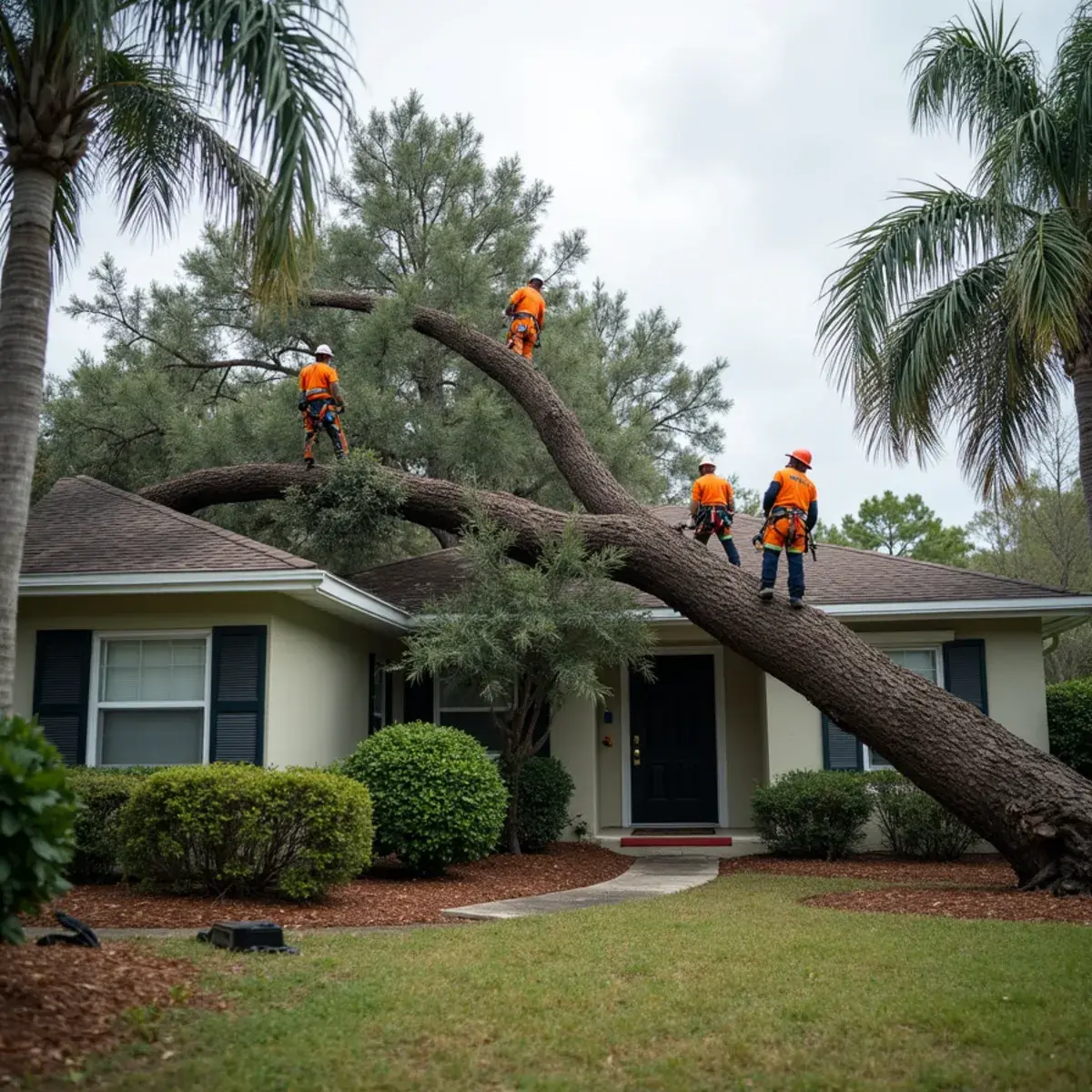
Photograph everything before it is cleaned up, whether or not you plan to file a claim. Include the failure point on any tree that came down, the damage to structures, and the overall scene.
If a tree hit a structure, keep the emergency make-safe work itemized separately from the full cleanup on your invoice — carriers frequently treat them differently. Our guide on what to do when a tree falls on your house covers the claim process in more detail.
Frequently asked questions
The bottom line
Walk the property, look up, look at the ground at the base of every big tree, and get anything ambiguous assessed before you park under it again.
We take post-storm assessment calls across St. Augustine, St. Johns County and Flagler County, and we will tell you which trees are genuinely finished and which ones just need cleaning up.
Want a real answer about your specific tree?
Call +1 (208) 635-2100 for a free on-site estimate across St. Augustine and St. Johns County. We will tell you plainly what it needs — including when the answer is nothing.
- 47 five-star reviews
- Licensed & insured
- 24/7 storm response