Short answer
Nobody can price a clearing job from a map. Two neighbouring five-acre parcels in Flagler County can differ by a factor of three, and the reason is never the acreage — it is what is standing on it and what has to happen to the material once it comes down.
Rather than quote numbers that would be meaningless against your particular lot, here is what a crew is actually calculating when they walk your property, so you can read competing quotes and tell which ones have understood the job.
The factors that actually set the price
Every honest clearing quote is built from the same handful of variables.
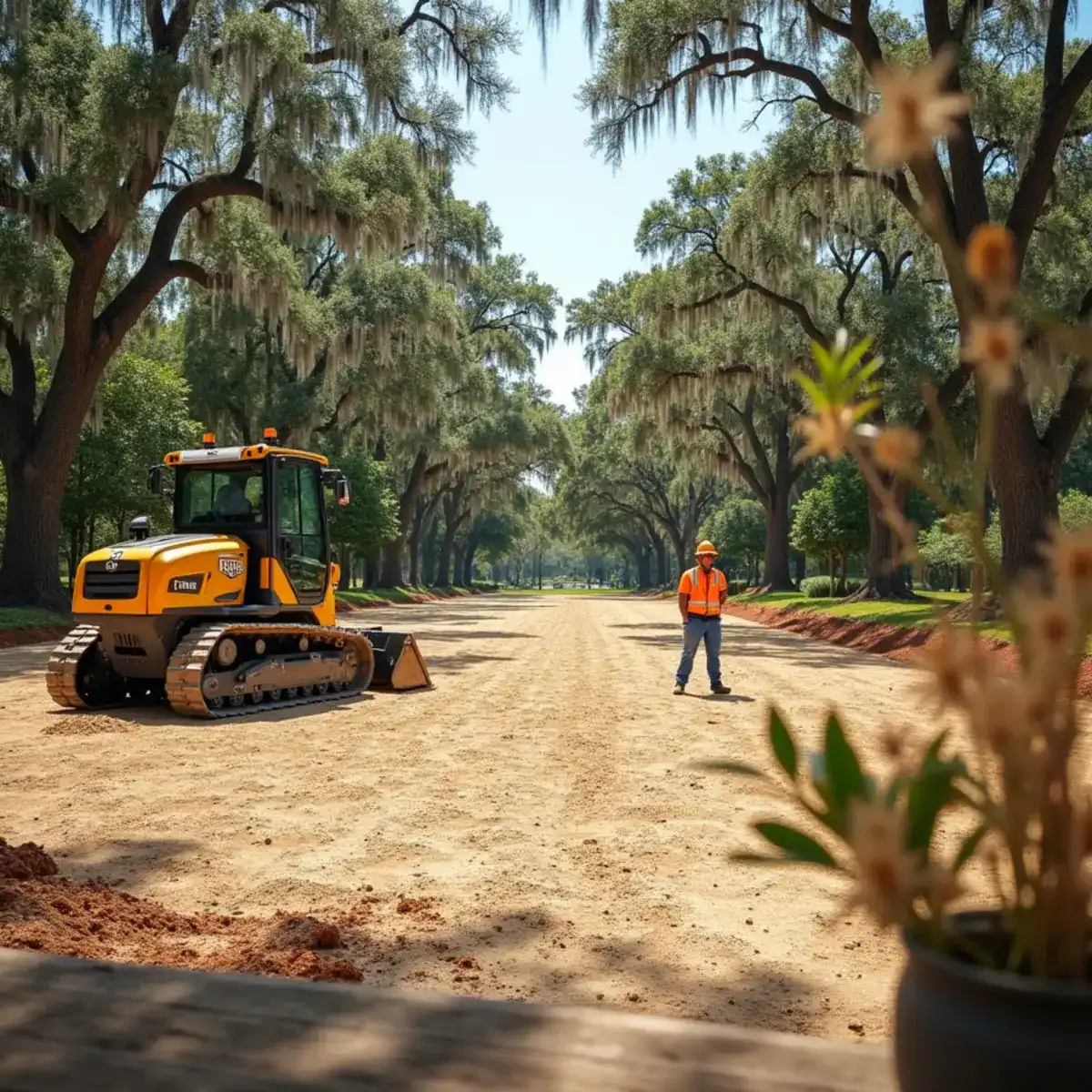
Why forestry mulching usually costs less
On most overgrown Northeast Florida parcels, the cheapest route is forestry mulching, and the saving comes almost entirely from disposal. A conventional dozer-and-burn operation spends a significant share of its time and budget pushing material into piles and then dealing with those piles. Mulching grinds everything where it stands and leaves it as ground cover, so that entire category of cost disappears.
The trade-off is that mulching leaves the root systems in the ground. For a lot you want to use — pasture, hunting lanes, recreation, fence lines, keeping scrub back from the house — that is irrelevant and you have saved real money. For a lot you intend to build on, the roots have to come out anyway and you need conventional clearing, sometimes after mulching has made the site workable.
The rule we use when quoting: if you are building on it, budget for conventional clearing. If you want to use it, see it or walk it, mulching almost always wins on price.
How long clearing actually takes
Time is the honest proxy for cost, because most of this work is priced on machine hours. Light underbrush on open, dry ground can run an acre or more in a day. Dense palmetto with a lot of standing small timber can drop to half an acre a day or less.
That range is why anyone quoting your lot sight-unseen is guessing. We give a realistic day count after walking the parcel, and on larger jobs we will tell you if density varies enough across the property that part of it should be priced differently from the rest.
Costs people forget to budget for
The clearing quote is usually not the whole project cost. The items below catch people out often enough to be worth listing.
Local rules that can change the number
Clearing regulations are not uniform across this region, and finding out after the fact is expensive. St. Johns County, the City of St. Augustine, Flagler County, Clay County and Putnam County each treat protected trees and land clearing permits differently, and Palm Coast enforces a notably strict tree ordinance.
Wetland and surface-water buffers are the other common surprise on rural acreage. Those sit with the state and the water management district rather than the county, and a parcel that looks completely dry in April can still be inside a buffer.
We check what applies to a parcel before quoting it, because a protected tree in the middle of a lot can change both the plan and the price.
Reading competing quotes
When you have two or three numbers in front of you, the useful questions are not about the headline figure. Ask what happens to the debris, because that is where the real difference usually sits. Ask whether stumps are included. Ask whether the quote assumes everything comes down, or whether they have priced working around the trees you want to keep.
A quote substantially below the others is usually not a more efficient crew. It is normally a different scope — material left on site, no permit work, or no allowance for the selectivity you asked for.
Frequently asked questions
The bottom line
Clearing is one of the few jobs where the cheapest quote and the best value genuinely can be the same thing — but only if the scopes match. Get the debris question answered first, confirm whether stumps are in or out, and be clear about which trees you want left standing before anyone prices the work.
If you have a lot in St. Augustine, Bunnell, Middleburg, Elkton, Hastings or anywhere across Northeast Florida that needs opening up, call Robert at (208) 635-2100. We will walk it with you and give you a realistic day count rather than a number pulled off a map.
Want a real answer about your specific tree?
Call +1 (208) 635-2100 for a free on-site estimate across St. Augustine and St. Johns County. We will tell you plainly what it needs — including when the answer is nothing.
- 47 five-star reviews
- Licensed & insured
- 24/7 storm response