Have Faith Trees — tree service in St. Augustine, FL
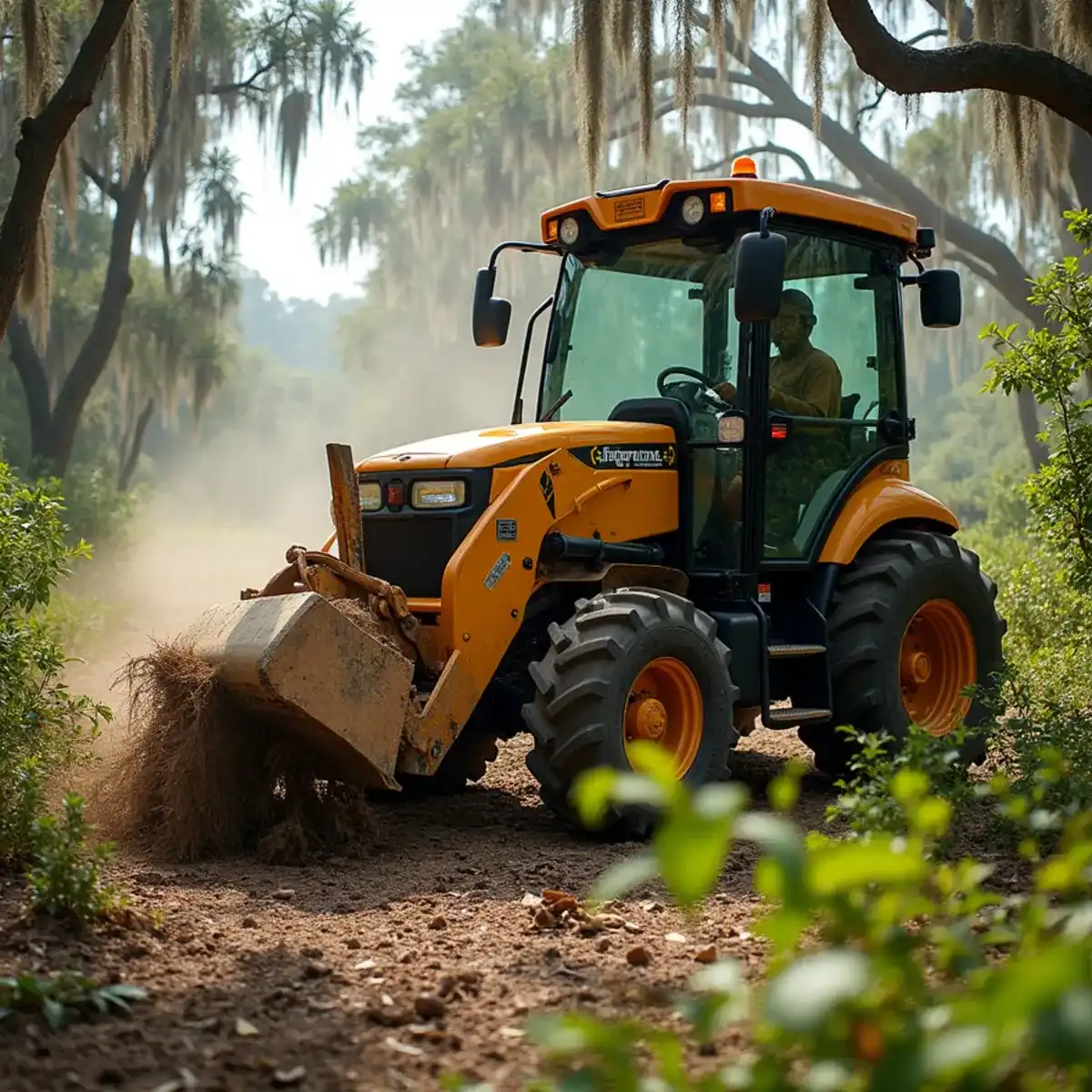
Forestry mulcher grinding palmetto scrub on a lot in Northeast Florida

St. Augustine, FL

Forestry Mulching in St. Augustine, FL

Most overgrown land in Northeast Florida is not covered in big timber. It is palmetto, wax myrtle, greenbrier, cat claw, volunteer pines and a tangle of vines, and the traditional approach — push it into piles with a dozer, then burn or haul them — spends a lot of money moving material you never wanted in the first place.

  • No burn piles, no haul-off
  • Mulch left as erosion control
  • Keeps the trees worth keeping
  • Light footprint on soil

Short answer

Forestry mulching clears underbrush, palmetto and small trees by grinding them in place with a single machine, leaving the material behind as a mulch layer instead of hauling or burning it. For most overgrown lots in St. Augustine and the surrounding counties it is faster and cheaper than conventional clearing, because there is no debris to pile, truck or dispose of. Call (208) 635-2100 for a free on-site quote.

Forestry mulching skips that entirely. A tracked carrier with a drum mulcher grinds standing vegetation into chip on the spot and leaves it on the ground. On the right job it clears in a day what a dozer-and-burn crew would spend a week on, and the finished surface is usable immediately instead of being a field of churned sand and root balls.

When forestry mulching is the right tool

  • A lot you bought that you cannot walk across, let alone survey
  • Palmetto and scrub creeping in toward the house or the fence line
  • Overgrown acreage you want usable for pasture, hunting lanes or recreation
  • A fence line, trail, firebreak or property boundary that has disappeared into brush
  • Understory that needs clearing while the mature canopy stays exactly where it is
  • Land where burn restrictions or neighbours make piling and burning impractical
  • Regrowth returning two or three years after the last clearing

What’s included with forestry mulching

Every line below is part of the quoted price. No hidden fees, and nothing discovered halfway through the job.

  • Grinding of underbrush, palmetto, vines and small-diameter trees in place
  • Selective work around marked mature trees, buffers and property lines
  • Perimeter and access lane cut first so boundaries stay visible throughout
  • Mulch spread as a ground cover layer for erosion control and regrowth suppression
  • A check on county and municipal clearing rules for your parcel before work starts
  • Fence lines, trails and firebreaks cut to the width you specify

Typical timeline

Light underbrush on open ground often runs an acre or more a day. Dense palmetto with a lot of standing small timber is slower, sometimes half an acre a day. We give a realistic day count at the quote after walking the parcel, because density varies enormously across a single lot here.

Quoted separately

  • Stump grinding or removal — mulching cuts to near ground level but does not extract root balls
  • Grading, filling or compaction to produce a finished build pad
  • Large-diameter timber, which is felled conventionally and quoted separately

Free estimate for forestry mulching in St. Augustine

Call +1 (208) 635-2100 and describe the tree, or send the form below and we will get back to you the same day.

  • 47 five-star reviews
  • Licensed & insured
  • 24/7 storm response

Forestry Mulching on the job in St. Augustine
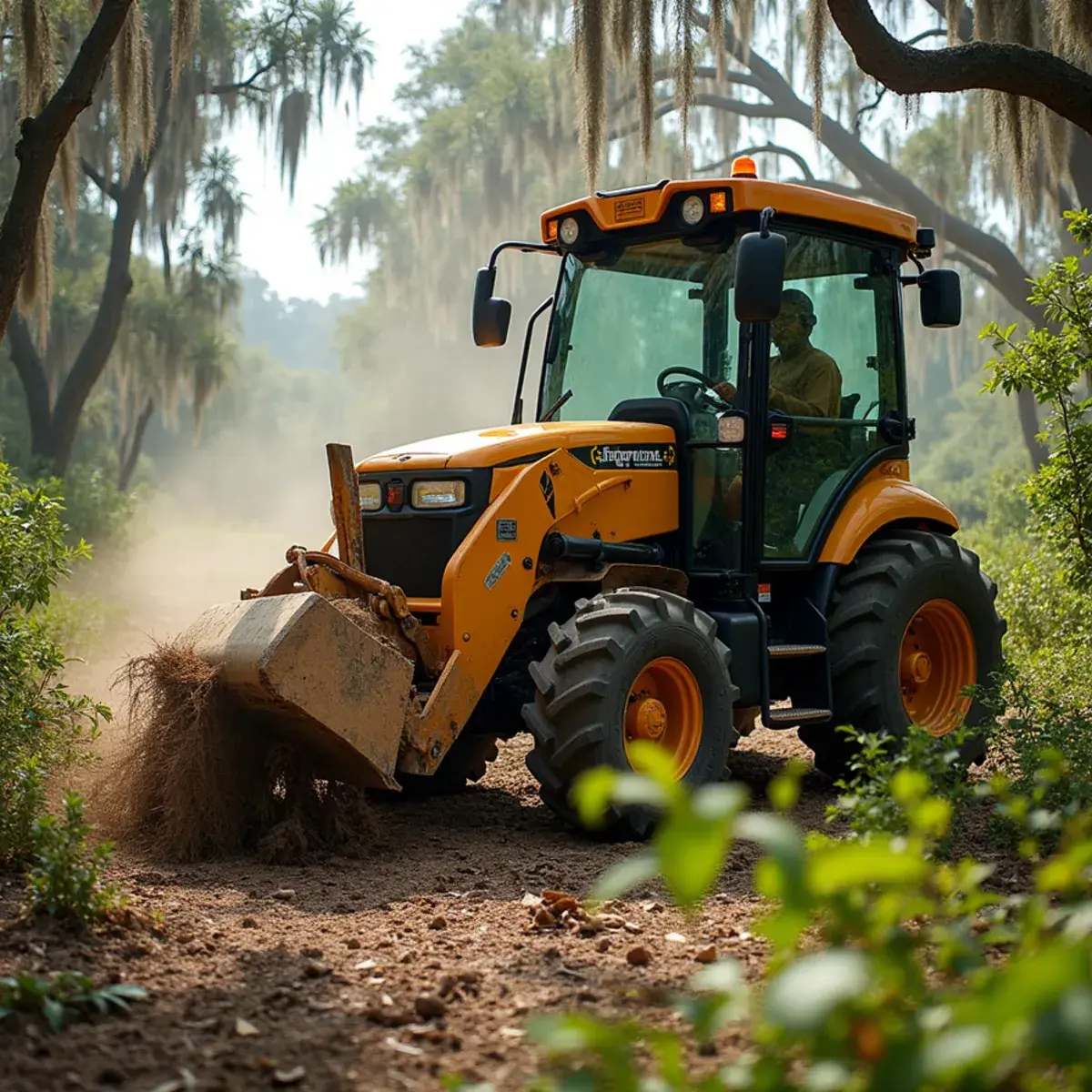
Real work, photographed on St. Johns County properties.

  • Forestry mulcher clearing scrub and underbrush near St. Augustine, FL
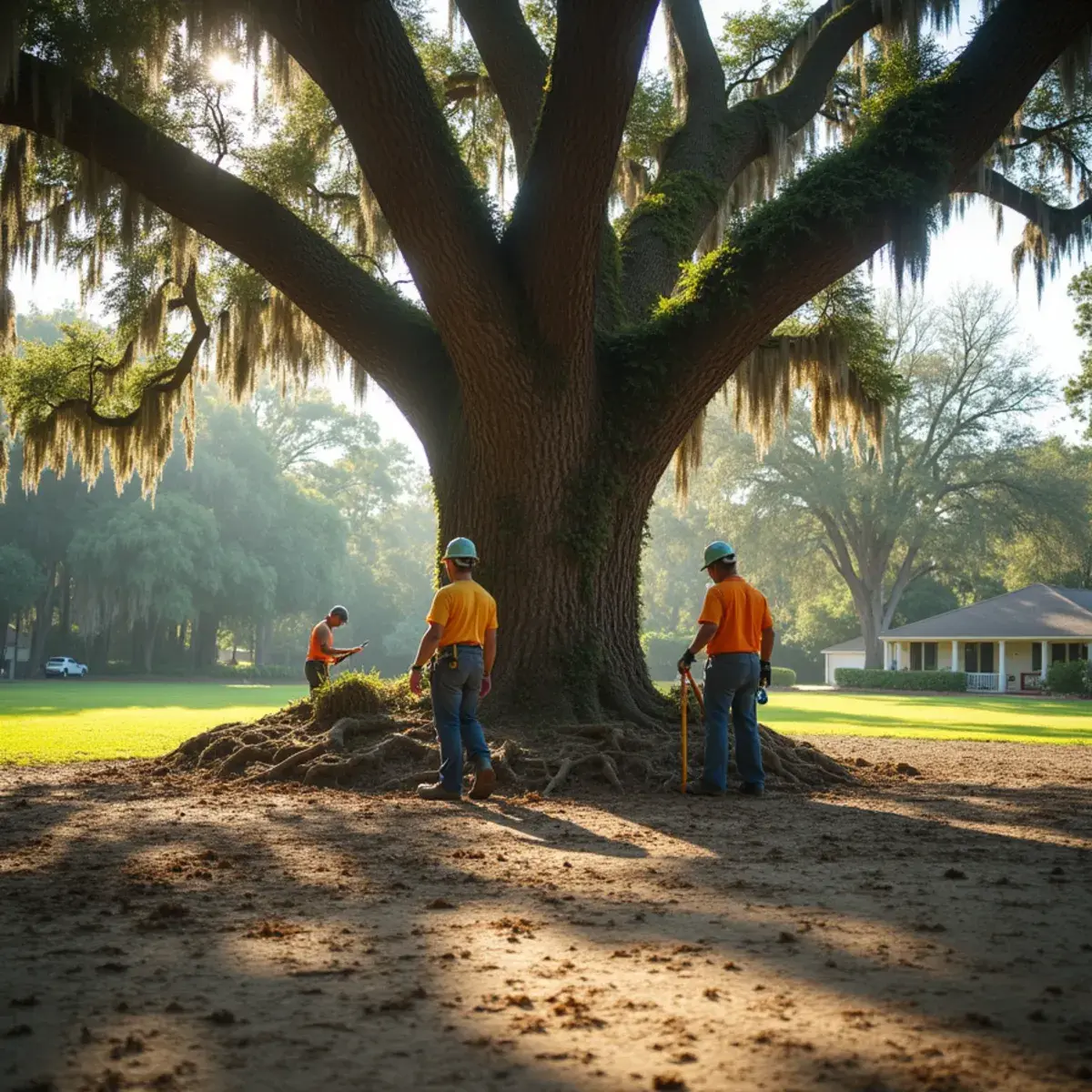
  • Selective forestry mulching around mature oaks left standing in Northeast Florida
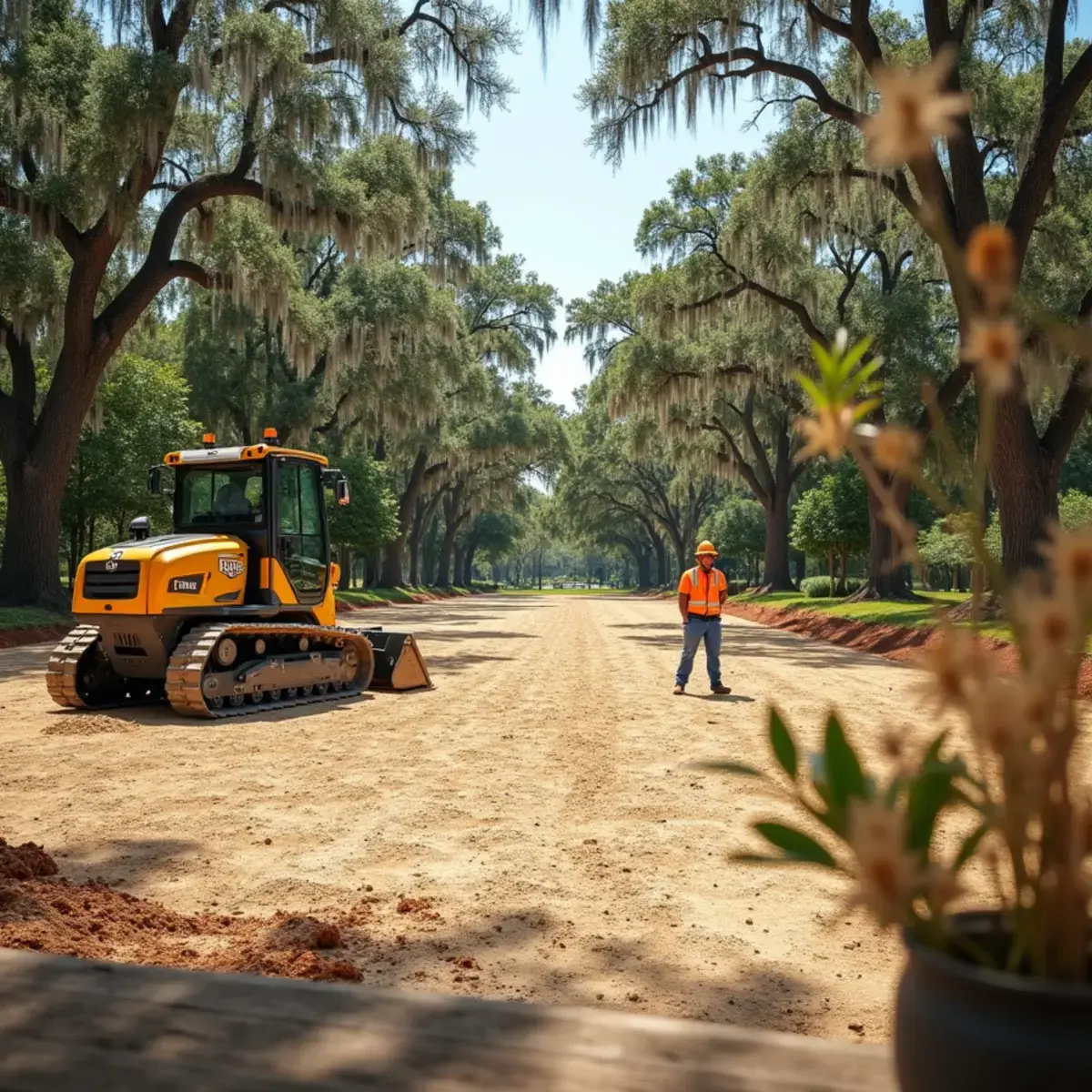
  • Lot cleared by forestry mulching with chip left as ground cover

Forestry mulching versus conventional land clearing

They solve different problems, and the honest answer is that plenty of jobs need both. Conventional clearing with a dozer or excavator removes everything including stumps and root systems, then the debris is piled and burned or hauled. That is what you want under a house slab, a road or a pond.

Mulching leaves the root systems in the ground and turns everything above grade into chip. It is faster, there is no disposal cost, the soil stays where it is, and you can work selectively around trees you are keeping. What it does not give you is a clean, gradeable surface — the roots are still down there.

The practical rule we use: if you are building on it, you need conventional clearing. If you want to use it, see it, walk it, farm it, hunt it or stop it creeping toward the house, mulching almost always costs less and leaves a better result.

What the mulch layer actually does for you

The chip left behind is not just a by-product you tolerate. On sandy Northeast Florida soils it does real work.

  • Holds soil through summer downpours on ground that would otherwise be bare and erodible
  • Suppresses the first flush of regrowth, buying you a season before anything needs attention
  • Breaks down into organic matter, which our sand badly needs
  • Keeps the surface walkable and workable straight away instead of leaving churned ruts
  • Removes any need for a burn permit or an air-quality window to dispose of the material

Local rules worth knowing before you clear

Clearing rules in this region are not uniform, and the fact that a machine can grind something does not mean you are allowed to. St. Johns County, the City of St. Augustine, Flagler County and Clay County each handle protected trees, buffers and land clearing permits differently, and Palm Coast in particular enforces a strict tree ordinance.

Wetland and surface-water buffers are the other common trap on rural parcels here. Those are state and water-management-district jurisdiction rather than county, and they do not disappear because a lot looks dry in April.

We check what applies to your parcel before the machine moves, and if a protected tree needs to come out as part of the job, we handle the permit application the same way we do on a removal.

Where we mulch

The heaviest demand is on rural and semi-rural acreage: Bunnell and the wider Flagler County timber country, Elkton and Hastings out in the farm belt, Middleburg and the Black Creek area in Clay County, Switzerland along SR-13, and Palatka and Putnam County to the west.

Closer in we do a lot of smaller-scale work — fence lines, rear-lot reclamation and understory clearing on larger residential parcels around St. Augustine, World Golf Village, St. Johns and Julington Creek.

How forestry mulching works, step by step

The same sequence on every job, so you know what is happening and when.

  1. 01Walk the lot and mark what staysBefore anything runs, we agree which mature trees, buffers and property lines are protected. Selective clearing is the whole point of mulching.
  2. 02Check the rules before the machine movesProtected species, wetland buffers and county clearing rules vary across St. Johns, Flagler, Clay and Putnam. We confirm what applies to your parcel first.
  3. 03Cut perimeter and access firstWe open the boundary and a working lane so the operator can see property pins and work inward without surprises.
  4. 04Grind in place, one passThe mulcher takes scrub, palmetto, vines and small-diameter trees down to chip where they stand. Nothing gets stacked.
  5. 05Spread the chip and leave itThe mulch is levelled across the worked area where it holds soil, suppresses regrowth for a season and feeds the ground as it breaks down.

Why choose Have Faith Trees for forestry mulching

8+ years on Northeast Florida trees, 47 five-star Google reviews, licensed and fully insured — and these four things specific to this job.

  • Nothing leaves the property

    No burn permit, no stump dump fees, no twenty truck loads down your road. That is where most of the saving against conventional clearing comes from.

  • We keep the trees worth keeping

    A dozer takes everything. A mulcher works around the live oaks and specimen pines you actually want on the finished lot, which is usually the difference in resale value.

  • Easier on the soil

    Tracked mulchers spread their weight and do not scrape topsoil into windrows the way blade clearing does. You keep your soil profile and the chip layer holds it through the next storm.

  • Honest about what it will not do

    Mulching is not grading and it does not pull stumps. If you need a finished build pad, you need conventional clearing too, and we will tell you that at the quote.

What affects the price

We do not publish flat prices, because an honest tree quote depends on the specific tree in front of us. These are the factors we are weighing when we walk your property.

Vegetation density
Light underbrush and dense palmetto with standing timber can differ by a factor of three in machine hours per acre.
Stem size
Everything under about six inches goes quickly. Larger material slows the drum and may need felling first.
Total acreage
Mobilising the machine is a fixed cost, so a five-acre job is much cheaper per acre than a half-acre one.
Selectivity
Working carefully around marked trees and buffers takes longer than clearing an open area.
Terrain and wet ground
Slopes, ditches and soft ground slow the carrier and sometimes restrict the season in which work can happen.
Access to the parcel
If the machine cannot get in without a lane being cut first, that is part of the job.

Forestry Mulching questions we get asked

What is forestry mulching?
Forestry mulching uses a tracked machine with a rotating drum to grind standing brush, palmetto, vines and small trees into chip where they stand. The material stays on site as a mulch layer, so there is nothing to pile, burn or haul away.
How much does forestry mulching cost in Northeast Florida?
It is priced by the machine hour or by the acre, and density drives it more than anything. Light underbrush covers far more ground per day than thick palmetto with standing timber in it. Because nothing is hauled or burned, it is usually noticeably cheaper than conventional clearing on the same parcel. Estimates are free and given after we walk the lot, because density varies so much.
Does forestry mulching remove stumps?
No. The drum cuts to near ground level but the root systems stay in place. That is exactly what makes it gentler on soil and faster, but it also means mulching alone will not give you a gradeable building pad. If you are building, you need conventional clearing or follow-up stump work.
Will the brush grow back?
Some will. Palmetto and many of our native shrubs resprout from roots that are still in the ground. The mulch layer suppresses the first flush, and a maintenance pass every couple of years keeps a lot open for far less than the original clearing cost. If you need permanent removal, the roots have to come out.
Do I need a permit for land clearing in St. Johns County?
It depends on the parcel, what is being removed and whether protected trees or wetland buffers are involved. Rules differ between St. Johns County, the City of St. Augustine, Flagler, Clay and Putnam. We check what applies to your property before work starts and handle any permit application for protected trees.
Can you mulch around the trees I want to keep?
Yes, and that is the main reason to choose mulching over a dozer. We mark what stays before the machine moves and the operator works around it. Keeping mature live oaks and good pines standing is usually the single biggest factor in what the finished land is worth.

Related tree services

Further reading

Forestry Mulching across Northeast Florida

We run forestry mulching jobs throughout St. Johns County and the surrounding coast. Pick your city for local tree notes and conditions.

Book forestry mulching in St. Augustine

Free on-site estimate, written price before we start, and full cleanup included. Same-day response for genuine hazards.

  • 47 five-star reviews
  • Licensed & insured
  • 24/7 storm response
Call NowFree Quote

47 five-star reviews · Licensed & insured · Free estimates